Dual-Density Ribbon Production on a Fiber Ribbon Line

Might the machines manufacturing fiber optic cable production machinery act as the unseen force that finally brings true gigabit access to every American home? This article delves into the recent breakthroughs in FTTH Cable Production Line Technology. These advancements are reshaping broadband network infrastructure and accelerating fiber to the home technology across the United States.

SZ Stranding Line

FTTH Cable Production Line

Compact Fiber Unit

Modern advancements in automation, precision engineering, and AI-driven inspection are significantly reducing production costs and enhancing quality. This synergy makes high-speed internet technology more dependable and simpler to roll out for service providers and municipalities.

Global optical cable output now exceeds hundreds of millions of kilometers annually. This surge is driven by 5G deployments, hyperscale data centers, and the growing demand for streaming and remote work. The subsequent sections will delve into automation and Industry 4.0, the use of low-loss materials, AI quality control, innovative cable designs such as bend-insensitive fiber and flat drop microcables, and the pursuit of sustainability in production lines.

Telecommunications manufacturing, network planning, and procurement professionals will discover valuable insights. These insights are on selecting the right fiber optic cable production machinery and optimizing processes. They are designed to meet regional deployment needs and future bandwidth growth.

FTTH Cable Production Line Technology

The term encompasses the machinery, control systems, and materials transforming optical preforms into deployable fiber cables. It encompasses fiber drawing and coating, SZ stranding, ribbon formation, extrusion of jackets, armoring, taping, automated testing, and final take-up systems. Each step’s precise control defines the fiber optic cable production process, ensuring consistent performance.

The manufacturing chain demands stringent tolerances. SZ stranding systems align dozens of strands with micron-level tension precision. Extrusion lines employ servo-driven extruders and laser micrometers to maintain jacket thickness within ±0.02 mm. Such precision minimizes variability, lowering attenuation and making field splicing easier.

Standards and regulatory frameworks heavily affect manufacturing decisions. Compliance with ITU-T recommendations, such as G.657, and regional fire codes like CPR in Europe, is essential. Meeting these standards ensures products align with the broader broadband network infrastructure.

Quality in production directly impacts network economics and service delivery. Lower attenuation and consistent geometry reduce splice loss and extend reach. This enhances reliability for carriers, ISPs, and utilities, while lowering the total cost of ownership for FTTH deployments. The growing demand for symmetrical multi-gigabit services, 5G backhaul, and data center interconnect is driving the scale-up of modern lines.

Comparing key process components and tolerances reveals their impact on output and quality.

SZ Stranding Line

Process Component Typical Control Effect on Performance
Fiber draw and coating Temperature stability ±1°C; concentricity control ±5 µm Stable fiber profile; lower bending-related loss
Ribbon formation and SZ stranding Tension control at micron scale; synchronization to 0.5 ms Consistent fiber pitch; reliable splice and connector behavior
Jacket extrusion and thickness control Laser micrometer feedback; ±0.02 mm tolerance Consistent mechanical protection; predictable installation behavior
Armoring & taping Servo feed rate; layer alignment control Better crush resistance; meets aerial and underground specs
Automated testing and take-up Line-speed OTDR and insertion-loss checks; tension-controlled winding Fully traceable quality; less rework and fewer field failures

Manufacturers like Corning, Prysmian Group, and Sumitomo Electric focus on tighter process control to meet operator expectations. Continuous advancements in the fiber optic cable production process enable networks to scale while maintaining performance in the last mile of broadband network infrastructure.

Automation And Industry 4.0 In Fiber Optic Cable Production

Factory floors for fiber optic cable production machinery now mirror advanced manufacturing plants from other industries. Smart controls, synchronized stages, and data-driven decision making raise output and protect quality. These shifts shorten commissioning time for new product families. They let telecommunications equipment manufacturers pivot between armored aerial lines and microcable runs with minimal downtime.

Smart machinery and PLC coordination

Programmable logic controllers coordinate stranding frames, ribbon formers, and take-up units to keep tension within sub-0.01mm windows. Servo-driven extrusion coupled with laser micrometers enforce ±0.02mm jacket thickness. The result is fewer rejects, less rework, and consistent optical performance on every reel.

Edge processing and process coordination

Local edge servers ingest terabytes of telemetry each day. They drive low-latency closed-loop adjustments and push immediate alerts when deviations occur. This approach keeps optical fiber cable equipment running at peak efficiency. It supports real-time quality assurance during long production runs.

AGVs, material flow, and workflow gains

Automated Guided Vehicles move heavy cable drums with millimeter-level repeatability. Laser-navigated AGVs reduce manual handling injuries and speed material flow between extrusion, curing, and drum stations. This automation lowers labor costs while raising throughput on ftth cable production line technology setups.

Benefits for makers and the supply chain

  • Increased throughput with consistent results
  • Quicker prototyping and a shorter path to market
  • Lower labor exposure and reduced operating cost
  • Better integration between optical fiber cable equipment and enterprise systems

Adoption across the industry ecosystem

Leading telecommunications equipment manufacturers pair PLCs with robotic arms, AGVs, and industrial IoT stacks to reach Industry 4.0 goals. This integration creates a resilient production base. It is able to adapt as demand shifts toward denser, more complex FTTH offerings.

Precision Engineering Breakthroughs For Lower Attenuation

Advances in materials and mechanical design are driving down loss in modern fiber lines. Engineers pair ultra-low loss fiber with tighter coating control to reduce intrinsic and bending attenuation. These gains matter to network operators who want longer spans and fewer amplifiers in high-speed internet technology deployments.

The fiber optic cable production process now favors smaller coated diameters such as 180µm and 160µm. These sizes let manufacturers increase fiber count and build denser microcables without sacrificing handling or optical stability.

Low-Loss Glass And Advanced Coatings

Manufacturers use improved glass formulations that lower Rayleigh scattering and reduce baseline attenuation. Ultra-low loss fiber variants extend reach for long-haul and high-capacity links while easing repeaters and amplifier requirements.

Coating chemistry has progressed too. UV-cured acrylate systems cut microbending loss by roughly 40% compared with earlier generations. That performance drop helps maintain signal integrity in cramped ducts and tight bends common in FTTH and 5G backhaul networks.

Central Strength Members And Mechanical Design

Mechanical design updates center on robustness and dimensional control. Fiber-reinforced plastic (FRP) rods with tensile strengths near 1.2 GPa serve as central strength members. They limit elongation during pulling and boost crush and bending resilience.

Water-blocking advances use swellable yarns and grease-free gel compounds to achieve near-complete moisture resistance. These measures protect optical paths and raise in-service reliability for cable installations in challenging environments.

These precision engineering steps integrate directly into fiber optic cable manufacturing workflows. When the production line aligns glass, coating, and mechanical specs, attenuation falls and networks gain reliability. That alignment shortens time to service for operators deploying modern broadband and high-speed internet technology.

Quality Control 4.0 And AI-Powered Inspection

Smart factories for fiber optic cable production now embed inspection systems that run continuously. These systems combine machine vision, machine learning, and automated testers to watch every reel and spool. The result is tighter feedback during the fiber optic cable production process and fewer surprises in the field.

AI models score coating uniformity, microbends, and surface defects at line speed. They cross-reference process telemetry from fiber optic cable production machinery and predict deviations hours before a reel moves to final spooling. This allows for in-line adjustments without stopping the line.

Automated OTDR integration performs 100% attenuation testing on every length. Modern OTDR systems using 1550nm sources map loss across reels and flag changes as small as 0.01 dB/km. Inline OTDR logs feed edge analytics for rapid root-cause tracing when a batch shows anomalies.

Robotic bend-radius simulators apply repeated stress cycles while monitoring macrobend loss. These testers validate compliance with ITU-T G.657 and customer bend specifications by running controlled bends at multiples of the cable diameter. Test outcomes are tied to batch IDs for traceability.

Thermal cycling chambers stress jackets and splices across wide temperature ranges. Environmental tests up to +85°C and down to -60°C confirm stability for extreme climates. Automated logs record each chamber run and link results to production lots.

Quality control 4.0 reduces returns and field failures by making 100% in-line testing routine. Edge analytics and OTDR integration shorten diagnosis times and improve regulatory compliance. Broadband operators see fewer truck rolls and better lifecycle performance for FTTH networks.

Cable Design Innovations For FTTH Deployments

New cable designs address common field challenges in fiber to the home technology. Engineers focus on durability, space economy, and speed of activation. These trends reduce installation time and lower long-term operational costs.

Bend-Insensitive Fiber Benefits For MDUs And Tight Routing

Bend-insensitive fiber maintains signal strength when routed around corners and through confined spaces. ITU-T G.657 compliant fibers minimize attenuation at tight radii, protecting links in multi-dwelling units and behind baseboards. Prysmian’s BendBright family and BendBrightXS exemplify how smaller coated diameters facilitate routing without compromising optical performance.

Flat Drop And Microcable Options For Flexible Deployments

Flat drop cable remains a preferred choice for aerial self-support, duct installs, and direct burial in North America. Its profile accommodates narrow pathways and enhances aerial spans with appropriate clamps. High-fiber-count flat drops necessitate enhanced radial strength and more robust hardware for longer spans.

Microcable technologies reduce outside plant profiles to 8 mm or less. Microcables and air-blown systems enable capacity addition inside existing ducts and congested corridors. These approaches reduce civil works, lower labor costs, and facilitate incremental network growth for urban and campus builds.

Pre-Connectorized Solutions To Speed Field Activation

Pre-connectorized solutions offer factory-terminated, plug-and-play assemblies that minimize field fusion and connector errors. Hardened outdoor connectors and vendor offerings like Prysmian’s ezDROP simplify mass rollouts and enhance first-pass yield. Service teams experience fewer truck rolls and faster service turn-up for smart city and 5G edge projects.

Design Main Benefit Typical Application Deployment Factor
Bend-insensitive fiber Reliable performance at tight radii MDUs, indoor routing, mini-pathways Use ITU-T G.657 fiber variants for indoor routing
Flat drop Versatile installation modes Aerial drops, direct burial, duct insertion Use correct clamps and hardware for radial strength
Microcable technologies Small footprint and incremental capacity Microduct installs, congested urban ducts Air-blown systems need compatible blower tools
Pre-terminated solutions Faster field activation and fewer errors Large deployments, rapid activation Standardized connector interfaces should be planned for

Sustainability And Energy Efficiency In Production Lines

Manufacturers in the fiber optic cable industry are embracing greener practices to reduce costs and meet consumer demands. Facilities prioritizing sustainable production witness improvements in operational efficiency and brand reputation. These advancements impact power systems, cooling, raw materials, and waste management.

Energy recovery strategies are becoming prevalent on extrusion lines and take-up reels. Regenerative braking on motor-driven spools returns power to the grid, thereby lowering net consumption. Studies indicate that energy recovery can reduce drive energy use by up to 32 percent in retrofitted reels.

Closed-loop cooling and chiller-less extrusion systems are reducing water demand. Adiabatic cooling can decrease water use by as much as 75 percent, particularly beneficial in water-scarce areas. Plants employing closed-loop cooling systems, in conjunction with heat exchangers, maintain temperature control while reducing utility expenses.

Recyclable jacket materials are transforming the disposal of cables. New polypropylene-based and modified polymer compounds meet mechanical and fire-safety standards, enabling higher recycling rates. Suppliers like Borealis and LyondellBasell are developing compounds that support the circular economy in cable jackets.

Process optimization minimizes scrap before recycling. Precision extrusion, in-line laser measurement, and real-time analytics reduce off-spec runs. Digital twins enable engineers to refine parameters, enhancing batch yields and reducing material waste.

Regulatory pressures and corporate ESG goals are compelling operators to favor vendors with transparent sustainability metrics. Municipal procurement teams and large network operators increasingly consider lifecycle impacts when selecting suppliers.

Focus Area Typical Improvement Main Benefit
Regenerative reel drives Up to 32% energy reduction Reduced electricity costs and lower peak demand
Closed-loop cooling / adiabatic systems Water use reduced by ~75% Lower water expenses and better compliance in arid areas
Recyclable outer-jacket materials Higher post-consumer recycling rates Better circularity and simpler end-of-life handling
In-line inspection and digital twins Noticeable double-digit reductions in scrap and off-spec output Better yield, less material waste
Sustainability reporting and certifications Better standing in procurement A competitive edge with network operators

Implementing these measures enhances the resilience of fiber optic cable manufacturing. It leads to lower lifecycle costs and easier compliance. Manufacturers integrating energy recovery and recyclable jacket materials position themselves for growth in the green procurement market.

Emerging Technologies Shaping Cable Manufacturing

New technologies are transforming the design and operation of fiber optic cable production machinery. These innovations expedite commissioning, diminish prototyping cycles, and empower manufacturers to test process alterations without halting production.

Digital twins create virtual replicas of entire production lines and novel cable designs. Engineers at Corning and Prysmian leverage these models to validate footprint, material flow, and layout before physical construction. Studies indicate commissioning can be up to 60% swifter when teams execute virtual scenarios and optimize layouts beforehand.

Digital twins facilitate expedited R&D for bespoke items such as armored variants and anti-rodent jackets. Virtual testing minimizes the necessity for physical prototypes and accelerates market entry. Teams can simulate process modifications, observe material interactions, and refine equipment parameters in a risk-free milieu.

AI systems introduce predictive capabilities on the factory floor. Machine learning scrutinizes 50+ parameters to forecast failures and quality deviations hours in advance. This AI predictive maintenance lessens unplanned downtime and elevates overall equipment effectiveness for high-volume lines.

Manufacturers like Siemens and ABB integrate AI with edge computing, enabling models to operate proximal to machines. Alerts prompt targeted inspections, spare part staging, and corrective actions before a fault halts production. This strategy maintains yield and shortens mean time to repair.

Quantum fiber sensing and distributed monitoring extend capabilities beyond production to the deployed cable. Embedded Brillouin and distributed acoustic sensing provide continuous strain and temperature data across extensive spans.

Integration of quantum fiber sensing enhances network diagnostics and supports structural health monitoring. Field teams acquire actionable insights when sensing data is linked to manufacturing records and test logs. This connection enables tracing anomalies to specific production batches.

Combined workflows—digital twins plus AI predictive maintenance—accelerate both commissioning and product development. Manufacturers embracing these tools can respond more swiftly to market fluctuations and deliver higher-value, differentiated cables.

Market-Driven Production Adaptations And Regional Needs

The global demand for fiber access compels manufacturers to adapt their production lines to local requirements. Regional fiber optic cable manufacturing now emphasizes durability, density, and safety. Plants employ modular equipment, enabling swift transitions between product families and meeting specific operator needs without significant delays.

In North America, networks predominantly opt for aerial routes and robust outside-plant solutions. Producers concentrate on creating armored aerial cables with enhanced breaking strength, corrosion-resistant armor, and simplified pole-mount installation. These designs withstand wind, ice, and long span stresses typical of utility corridors.

North American Priorities: Aerial And Armored Designs

Armored aerial cables are engineered for enduring reliability on poles and open spans. They boast 1,200 lb or greater tensile ratings and integrated steel or aluminum armoring to safeguard fibers against mechanical damage. Manufacturers deploy modular armoring units and rapid testing rigs, enabling mass production of these variants.

APAC And Europe: High-Density Microcables And Regulatory Compliance

In APAC, the scarcity of space and the need for dense builds drive demand for high-density microcables. These cables feature compact stranding towers and reduced-diameter fiber stacks, allowing for more fibers per duct. They significantly reduce civil costs by facilitating quicker overbuilds and easier microtrenching.

Europe mandates strict regulatory compliance for buildings and public spaces. Producers offer halogen-free, flame-retardant jackets that meet CPR classes like B2ca. Compliance testing is integrated into production lines, ensuring products meet fire-safety rules for indoor and outdoor applications promptly.

Across regions, the ability to adapt production is paramount. Compact stranding towers, modular extrusion and armoring units, and rapid prototyping enable factories to switch from armored aerial cables to microcable runs in mere hours. This flexibility allows operators to fulfill unique specifications while adhering to local codes.

Case Studies And Manufacturer Spotlight: Shanghai Weiye OFC Equipment

Shanghai Weiye OFC Equipment has solidified its reputation as a leading telecommunications equipment manufacturer. They cater to the FTTH and broader fiber markets. Their optical fiber cable equipment boasts advanced features, including SZ stranding, ribbon production, and extrusion with servo control. This ensures tight tolerances and high yields.

Their machinery for fiber optic cable production is equally impressive. It includes tape armoring units, automated take-up reels with regenerative drives, and integrated OTDR and vision inspection stations. These systems support various applications, such as bend-insensitive fiber, microcables, and pre-connectorized solutions. These are crucial for FTTH, 5G backhaul, and dense urban deployments.

Quality and sustainability are integral to their offerings. They employ OTDR testing, AI-powered inspection, and robotic bend simulators to meet QC 4.0 standards. Additionally, energy recovery options and closed-loop cooling reduce operating costs and scrap. Modular designs with AGV and edge computing support enable rapid reconfiguration and digital twin commissioning, catering to U.S. manufacturers and contract producers.

For operators in the United States, investing in Shanghai Weiye OFC Equipment can significantly enhance production capabilities. It ensures compliance with strict attenuation and mechanical specifications. This accelerates the introduction of new cable families, vital for broadband expansion. The company’s systems harmonize technical performance with practical manufacturing requirements.

FAQ

Q: What Advances Define Modern FTTH Cable Production Line Technology?

A: Modern FTTH cable production lines integrate high-precision mechanical systems with servo-driven extrusion. They utilize SZ stranding and ribbon machines, along with automated take-up reels. These systems also include integrated OTDR and AI-driven vision inspection, PLC orchestration, AGV material handling, and edge computing. Such advancements enable micron-level tension control and ±0.02mm jacket thickness tolerances. They achieve 95%+ automation and 100% in-line testing, reducing attenuation, scrap, and time-to-market.

Q: How Do You Define The Scope Of FTTH Cable Production Line Technology?

A: FTTH cable production line technology encompasses the machinery, process controls, and materials for fiber-to-the-home networks. It includes optical fiber drawing and coating, SZ stranding, and ribbon formation. Extrusion of inner and outer jackets, armoring or taping modules, and automated take-up and drum handling are also part of it. In-line optical and mechanical testing, along with the software stack—PLCs, edge servers, and industrial IoT—are integral to the process.

Q: Why Does Production-Line Quality Matter For Broadband Network Infrastructure?

A: Production-line quality directly impacts attenuation, splice loss, mechanical robustness, and long-term reliability. High-precision manufacturing minimizes intrinsic and macrobending losses. It extends reach, lowers field interventions, and improves first-pass yields. For carriers and ISPs, this translates to fewer truck rolls, lower total cost of ownership, and higher service availability for high-speed internet, 5G backhaul, and symmetrical multi-gigabit home services.

Q: What Role Do PLCs And Smart Machinery Play In Industry 4.0 Production Lines?

A: Programmable logic controllers (PLCs) provide deterministic synchronization across SZ stranding, ribbon forming, and take-up units. They enable sub-0.01mm tension precision, closed-loop extrusion control, automated recipe changes, and safety interlocks. When combined with robotic arms and automated armoring modules, PLCs form the backbone of Industry 4.0 production. They drive repeatability and high throughput with minimal human intervention.

Q: How Are AGVs And Edge Computing Used On Modern Cable Production Floors?

A: Laser-navigated AGVs move heavy drums and material spools with high positioning accuracy. Industry examples show 1,200kg capacity and sub-5cm placement. Edge computing processes terabytes of telemetry locally, delivering low-latency analytics and real-time quality alerts. Together, AGVs and edge computing improve material flow, reduce manual handling risks, and enable rapid correction of process deviations.

Q: What Precision Engineering Improvements Reduce Optical Attenuation?

A: Improvements include ultra-low-loss (ULL) glass formulations and advanced UV-cured acrylate coatings. These coatings cut microbending losses. Smaller coated diameters (e.g., 160–180µm) enable denser cable designs. Tight control of drawing tension, coating cure profiles, and extrusion concentricity—monitored by laser micrometers and closed-loop controls—lowers intrinsic loss and fluctuation across production reels.

Q: How Do Central Strength Members And Mechanical Design Affect Cable Performance?

A: Mechanical designs incorporating fiber-reinforced plastic (FRP) rods or high-strength central members control elongation during installation. They resist crush and bending, protecting fiber glass from strain. Proper selection of strength elements and buffer constructions reduces installation-induced loss, improves long-term reliability, and supports aerial or duct deployments with demanding mechanical requirements.

Q: What Does “QC 4.0” Mean And How Is It Implemented?

A: QC 4.0 describes a fully instrumented, data-driven quality-control regime. It includes 100% in-line testing, AI-powered vision inspection, automated OTDR mapping, robotic bend tests, and environmental chambers integrated into the production workflow. Edge analytics, traceable test logs, and predictive models enable rapid root-cause analysis, minimize returns, and ensure compliance with ITU-T and operator specifications.

Q: How Is OTDR Testing Integrated Into Production And What Sensitivity Can It Achieve?

A: Automated OTDR stations are integrated inline or at take-up to perform full-length attenuation mapping. They use dual-wavelength sources (including 1550nm). Modern setups can detect variations down to 0.01 dB/km, map localized defects, and tie results to batch IDs for traceability. This enables manufacturers to flag and quarantine reels before shipment, improving field reliability.

Q: What Are Robotic Bend-Radius Simulators And Thermal Cycling Chambers Used For?

A: Robotic bend-radius simulators apply repeated controlled bends and record macrobend loss to verify compliance with ITU-T G.657 and customer specs. Thermal cycling chambers run jackets and assemblies through −60°C to +85°C cycles to validate dimensional stability, jacket adhesion, and splice performance under extremes. Automated test logs provide traceable evidence for operator and regulatory requirements.

Q: What Cable Design Innovations Are Most Relevant To FTTH Deployments?

A: Key innovations include bend-insensitive fiber (BIF) for tight routing in MDUs and indoor paths. Flat drop and high-fiber-count flat assemblies are used for aerial and direct-burial North American use cases. Microcables and air-blown systems are for duct-constrained environments. Pre-connectorized assemblies speed field activation and reduce termination errors.

Q: Why Is Bend-Insensitive Fiber Important For MDUs And Tight Routing?

A: Bend-insensitive fiber maintains low loss under tight radii and repeated handling. It is crucial in multi-dwelling units, plenum runs, and behind baseboards. ITU-T G.657-compliant fibers help prevent macrobending loss during installation and reduce service calls related to routing-induced degradation. They support denser routing with fewer installation constraints.

Q: How Do Flat Drop Cables And Microcables Differ In Deployment Benefits?

A: Flat drop cables offer flexible aerial and direct-burial deployment with compact profiles suited to service drops. Microcables (≤8mm) and microduct systems excel in congested ducts and enable incremental capacity growth via air-blown installation. Choice depends on regional deployment practice, span requirements, and operator preferences.

Q: What Advantages Do Pre-Connectorized Solutions Provide?

A: Factory-terminated, hardened pre-connectorized assemblies reduce field splicing, eliminate human termination variability, and speed up service activation. They improve first-pass yield. Products like hardened OptiTap-style connectors and vendor pre-terminated drops support rapid mass-deployment strategies and lower workforce training needs.

Q: How Are Energy Recovery And Cooling Innovations Improving Sustainability?

A: Regenerative drives on take-up reels and motor assemblies can capture braking energy, reducing net consumption by industry-reported amounts (example: up to ~32%). Chiller-less or adiabatic extrusion cooling reduces water use by up to 75%. These measures lower operational cost, reduce water consumption, and align production with corporate sustainability targets.

Q: Are Recyclable Jacket Materials And Waste Reduction Practical For Production?

A: Yes. Recyclable compounds such as specially formulated polypropylene-based jackets can meet mechanical and flame performance while improving end-of-life recycling. Precision extrusion and in-line inspection reduce scrap rates. Combined with material-efficient tooling and digital-twin optimization, manufacturers can materially lower waste and support circular-economy goals.

Q: What Role Do Digital Twins Play In Cable Manufacturing?

A: Digital twins create virtual replicas of production lines and cable designs to simulate process changes and validate material flow. They accelerate commissioning. Industry estimates show commissioning and prototyping time reduced significantly (case examples up to ~60%). Digital twins also support offline testing of recipe changes and faster roll-out of new product families.

Q: How Does AI Enable Predictive Maintenance And Quality Prediction?

A: Machine learning models trained on dozens of production parameters can forecast equipment faults hours in advance and predict quality drift. Predictive maintenance reduces unplanned downtime, improves OEE, and allows planned service windows. AI-driven quality models provide early alerts for deviations that would otherwise produce rejects or field failures.

Q: What Is The Significance Of Quantum And Distributed Sensing Integration In Cables?

A: Embedding distributed sensing capabilities—such as Brillouin-based strain sensing and distributed acoustic sensing (DAS)—adds network-level telemetry for structural health monitoring, intrusion detection, and environmental diagnostics. Integrating sensing into cable designs enables added-value services and improved operational visibility for carriers and critical infrastructure owners.

Q: How Do Production Lines Adapt To Regional Market Needs (North America, APAC, Europe)?

A: Lines are modular and reconfigurable to meet regional priorities. North America focuses on robust aerial and armored designs with higher breaking-strength requirements for pole deployments. APAC emphasizes high-density microcables and compact stranding for dense urban rollouts. Europe prioritizes halogen-free flame-retardant jackets and CPR fire-class compliance. Modular stranding towers, quick-change extrusion heads, and configurable armoring units enable fast changeovers.

Q: What Manufacturing Equipment Is Essential To Support Varied FTTH Product Families?

A: Essential equipment includes SZ stranding machines (dozens to hundreds of fibers with micron-level tension control), ribbonization lines, servo-driven extruders with laser micrometers, tape or armor-wrapping stations, automated take-up reels with regenerative drives, inline OTDR and AI vision inspection, AGV drum handling, and edge computing/PLC orchestration for Industry 4.0 integration.

Q: How Do Manufacturers Ensure Compliance With Standards Like ITU-T G.657 And Regional Safety Codes?

A: Compliance is ensured via precise material selection (bend-insensitive fiber types), controlled production recipes, automated in-line tests (OTDR, macrobend testers), and environmental qualification (thermal cycling, flame tests). Traceable test logs, batch IDs, and documented QC protocols align production outputs with ITU-T recommendations and regional regulations such as CPR classifications in Europe.

Q: What Benefits Can U.S. Manufacturers Expect From Equipment Suppliers Like Shanghai Weiye OFC Equipment?

A: Suppliers like Shanghai Weiye provide modular, Industry 4.0-ready production machinery—SZ stranding, ribbon lines, precision extrusion with closed-loop controls, AI inspection modules, and integrated OTDR testing. This enables U.S. contract manufacturers and in-house producers to scale FTTH output, maintain tight attenuation and mechanical tolerances, adopt sustainability options (energy recovery, closed-loop cooling), and shorten time-to-market for variants such as armored aerial, flat drop, microcable, and pre-connectorized assemblies.

Q: How Do In-Line AI Inspection Systems Detect Subtle Defects At Production Speed?

A: AI-powered machine vision inspects coating uniformity, surface defects, and microbends using high-resolution cameras and convolutional models trained on labeled defect libraries. Models correlate dozens of parameters—diameter variance, coating texture, micro-crack signatures—to predict deviations hours before they become out-of-spec reels. This enables automated rejection, parameter adjustment, and reduced downstream field failures.

Q: What Testing Sensitivity And Traceability Are Achievable For Attenuation And Mechanical Validation?

A: Modern production lines integrate automated OTDR systems capable of resolving 0.01 dB/km changes, robotic bend simulators for repeated macrobend stress testing, and thermal chambers for extreme environment validation. Test results are stored with batch and reel identifiers in edge or cloud databases, providing full traceability for operator acceptance, regulatory audits, and customer service diagnostics.

Q: How Do Production Innovations Translate Into Market Outcomes For Network Operators?

A: Innovations in manufacturing yield lower-loss fibers, denser cable designs, and factory-terminated assemblies that reduce installation time and errors. Operators benefit from higher service reliability, fewer truck rolls, lower lifecycle costs, and faster rollout of symmetrical multi-gigabit services. These outcomes support widespread FTTH adoption, 5G backhaul capacity, and scalable connectivity for smart cities and hyperscale data center interconnects.

Related: Digital Twin Applications for The Modern Fiber Ribbone Line

Grease Trap Pumping in La Crescenta Montrose Odor Elimination After Professional Pumping Service

Operating a successful food service business takes serious effort. You manage stock, team members, and guests day after day. The last thing you need is a plumbing disaster caused by poor grease management. That’s where we come in. Our nearby team works hard to keep your commercial kitchen functioning without disruption. We help you remain compliant with health regulations while avoiding expensive emergencies.

View details about Grease Cleaning Pros in La Crescenta Montrose

This resource is about Grease Cleaning Pros in La Mirada

This resource is about Grease Cleaning Pros in Long Beach

This guide will walk you through essential maintenance for your plumbing system. We cover interceptors, advanced hydro jetting service, and eco-conscious used oil recycling.

We aim to provide reliable, stress-free service tailored to your timetable. We transform a messy chore into a simple, scheduled part of your business operations.

Main Takeaways

  • Proper maintenance of your plumbing system is critical for restaurant compliance and operation.
  • Regular service prevents costly emergencies and keeps your business running smoothly.
  • Hydro jetting delivers a strong, lasting solution for clogged drains and pipes.
  • Recycling used cooking oil promotes sustainability and helps create useful products.
  • Partnering with a dedicated local service provides reliable, scheduled maintenance.
  • Knowing the warning signs of a problem can help you avoid major disruptions.
  • A professional team works around your hours to minimize business interruption.

The Essential Role Of Grease Trap Cleaning For Northridge Restaurants

People often use the term infrastructure protection for buildings, yet it fits your restaurant’s concealed plumbing network just as well. For every local food service business, maintaining this system is not optional—it’s a core operational necessity.

Consistent maintenance helps protect your routine operations, your budget, and your standing with regulators. Ignoring it opens the door to a chain of problems no owner wants to deal with.

Stopping Expensive Plumbing Failures And Downtime

FOG—fats, oils, and grease—acts like a silent enemy in commercial kitchens. Even a highly attentive kitchen team cannot keep all of it out of your drainage system.

Dishwater carries dissolved fats. Steam from cooking transports particles that cool and stick inside pipes. A quick error during peak service can send problem-causing material into the drain.

This steady accumulation is inevitable. Without intervention, it forms solid blockages that can halt your kitchen operations completely.

The cost of an emergency plumber is only the beginning. You may also lose revenue during the shutdown and deal with property damage.

Investing in scheduled professional maintenance is far more economical. It works like an insurance policy against catastrophic failures.

Our team delivers this important preventative service. Our specialists spot small problems long before they turn into major emergencies.

Grease Cleaning Pros in La Crescenta Montrose

Staying Compliant With Local Health And Safety Regulations

Local health departments enforce strict rules for an important reason. They must protect the municipal sewer system from FOG-related damage.

Non-compliance can lead to major problems for your operation. Substantial fines are common for violations.

Repeated offenses can risk the suspension of your operating license. Neglect at this level may also negatively affect the surrounding environment.

Regular service from a dedicated provider ensures you pass every inspection. We handle the cleaning and provide the documentation you need.

This proactive approach stops the foul odors and backups that signal trouble. That allows you to focus on your guests with greater confidence and peace of mind.

Think of it as a routine oil change for a critical piece of equipment. It keeps everything functioning smoothly through daily kitchen activity.

When Should Your Grease Trap Be Professionally Cleaned?

One of the most common questions from restaurant managers revolves around the ideal timing for this essential maintenance. No one-size-fits-all calendar date works for every operation.

Most restaurants need service on their equipment every 30 to 90 days. The exact interval depends on your kitchen’s output and the foods you prepare each day.

Only a tailored schedule can truly protect efficiency and compliance. That schedule protects your plumbing system and supports smooth daily operations.

Adjusting Schedules To Match Your Kitchen’s Volume And Menu

Your menu and customer traffic are the largest determining factors. A busy establishment with multiple fryers will produce far more waste than a small café.

Busy locations like steakhouses and fried chicken shops frequently need monthly service. They simply generate too much material to wait longer.

A small bakery or pizza shop might need monthly service checks in the beginning. Following assessment, they might stretch service to cleaning every 60 to 90 days.

Our specialists at Grease Cleaning Pros assess your exact needs. We examine weekly sales, cooking methods, and even dishwashing habits.

That assessment helps us design a service plan that stops problems before they start. It also optimizes your maintenance budget by avoiding unnecessary visits.

  • Busy hotel kitchens: Often need the most frequent service.
  • Family diners: May need a middle-range maintenance schedule.
  • Sandwich shops: May qualify for longer service intervals.

The Risks Of Waiting: From Foul Odors To Fines

Ignoring your service schedule opens the door to a chain of issues. The critical point for any unit is when it reaches 25% capacity.

At this level, the device stops working properly. It can no longer efficiently separate fats and oils from wastewater.

Early signs are usually mild at first. You might notice sinks draining slower than usual.

Next, persistent foul odors start rising from the drains. The smell can spread into customer areas and harm your guests’ experience.

The next costly development is often a complete blockage. These blockages can shut down the kitchen during your busiest periods.

Local health inspectors review maintenance records carefully. Neglect can result in violations and serious financial penalties.

Routine professional cleaning removes these risks completely. It keeps your system operating at peak performance.

With a dedicated provider, you get predictable scheduling and transparent pricing. That relationship gives you peace of mind because your kitchen stays protected.

Understanding Your Setup: Grease Traps And Grease Interceptors

Food service businesses do not all handle fats, oils, and grease with the same equipment. Two primary systems handle this crucial task. Knowing which one you have is essential for proper care and compliance.

Think of a grease trap as a compact warrior. A grease interceptor is the heavy-duty champion. Both perform the same vital job but on vastly different scales.

Local regulations often determine which system is required. That decision depends on your kitchen size, menu, and daily water usage.

In-Sink Grease Traps For Smaller Establishments

These units are installed directly under sinks or dish stations. They are designed for lower-volume operations.

Most in-sink grease trap units hold roughly 20 to 50 gallons. It is perfect for businesses with limited frying.

These units are ideal for places such as:

  • Small cafés and coffee shops
  • Delis and bakeries
  • Pizza shops with lower grease output

The system works by slowing wastewater flow. That allows fats to cool, solidify, and rise to the top for removal. Routine service helps stop cooking oil from creating problems.

Underground Grease Interceptors For High-Volume Operations

Large operations require a more heavy-duty solution. An underground grease interceptor is a substantial tank buried outside.

These tanks are made of concrete or durable plastic. They often hold anywhere from 500 to more than 5,000 gallons.

A grease trap interceptor of this size is often necessary for:

  • Busy steakhouses and hotel kitchens
  • Large cafeterias and food processing operations
  • Any site that handles high-volume frying

The basic principle is the same as with smaller traps, but the scale is much larger. These systems manage large grease output from daily operations.

Cleaning these large grease interceptors requires specialized equipment. Vacuum trucks are often needed for complete service.

Correct care for either type helps safeguard the municipal sewer system. This stops used cooking oil and grease from damaging the wider system.

Our Grease Cleaning Pros team handles both types of equipment. Portable pumps are used for under-sink systems, while powerful trucks handle large interceptors.

You should never use hot water alone to clear a grease blockage. This can worsen the problem by moving grease further into pipes.

Understanding your specific grease trap interceptor setup is the first step to reliable maintenance.

Why Hydro Jetting Outperforms Other Drain Cleaning Methods

When business owners look for an effective answer to chronic plumbing blockages, they often find advanced hydro jetting technology. This method stands apart from temporary fixes by addressing the root cause of drainage issues.

It provides a deep, comprehensive cleaning that restores pipes to near-new condition. Knowing why it performs better than other methods is important for any business owner.

When drains slow or clog, many restaurant owners reach for quick remedies. These common attempts often make the problem worse over time.

The Limitations Of Hot Water And Chemical Treatments

Using hot water down the drain can look like a simple solution. This can soften grease for a moment and offer short-term relief.

However, that melted material usually moves farther into your plumbing system. It eventually cools and solidifies farther down the line in a more difficult location.

That creates a larger and more stubborn blockage deeper in the line. The problem is relocated, not solved.

Chemical treatments bring an entirely different set of concerns. Over time, they can damage pipe materials through corrosion.

These harsh substances pose safety risks to your staff and the environment. They also do very little against hardened grease deposits.

Both methods are like putting a bandage on a broken pipe. They do not deliver the lasting results your kitchen requires.

Using High-Pressure Precision To Restore Pipe Flow

Hydro jetting is the long-term solution to these recurring issues. This method relies on high-pressure water streams to scours pipe walls thoroughly clean.

The process delivers up to 4000 PSI of pure cleaning power. This force blasts away years of accumulated buildup, including hardened deposits.

The hydro jet effectively removes away years buildup in a single session. It cleans the entire pipe circumference, not just a hole.

This restores full flow capacity and prevents immediate re-clogging. Compared with snaking, it does not leave residual debris inside the line.

This environmentally friendly method uses only water, without harsh chemicals that may damage pipes. Grease Cleaning Pros utilizes state-of-the-art equipment for this task.

Advanced hydro jetting equipment allows us to navigate bends in the pipe system easily. It reaches deep into your plumbing for a complete clean.

If standard methods have failed, you may need hydro jetting. With enough force, hydro jetting blasts through even the toughest blockages.

After a service, your drains handle peak kitchen hours effortlessly. You gain peace of mind with pipes that function like new.

This method delivers better results for both preventative maintenance and stubborn clogs. That makes it the intelligent option for a dependable, efficient commercial kitchen.

Warning Signals That You Need Grease Cleaning Pros In Northridge

Recognizing the early distress calls from your drainage system is the key to preventing a full-scale kitchen shutdown. Your plumbing gives clear warning signals once buildup reaches a critical level.

Understanding these warning signs can save your business from costly repairs and major disruptions. No restaurant owner should gamble by ignoring these warnings.

Slow Drains, Backups, And Odd Sounds

Slow drains at sinks or dish stations are often the earliest clue. This indicates that accumulated material is restricting water flow through your pipes.

When multiple fixtures back up at the same time, the problem is likely in your main line. That kind of situation requires immediate professional attention.

Pay attention to odd gurgling sounds coming from drains or toilets. Such noises are a common sign that a blockage is trapping air inside the plumbing.

If clogs keep returning after snaking, the root cause isn’t being solved. At this stage, you likely need hydro jetting for a complete clean.

Persistent Odors And Visible Grease Problems

Your sense of smell is a surprisingly powerful diagnostic tool. Persistent foul odors, particularly sewage odors near drains, suggest that waste is not moving properly.

Visible problems are a clear red flag. An oily film on standing water or debris floating inside a grease trap indicates the system is overwhelmed.

Water collecting around an outdoor interceptor lid often signals an overflow. That kind of overflow can create a serious sanitation problem around your property.

If kitchen floors remain unusually slick, that could indicate a hidden problem. It may be a sign of used cooking oil leaking from a damaged line.

As soon as you see any of these signs, reach out to our team immediately. Early intervention stops small issues from becoming complete failures.

The experts at Grease Cleaning Pros can perform a complete evaluation. We’ll tell you if you need hydro pressure cleaning or another service.

Don’t wait for a disaster. Reach out today to get quote and restore your kitchen’s smooth operation.

Our Environmental Commitment: Recycling Used Cooking Oil

Supporting a circular economy begins with rethinking what you call waste. In a kitchen, the used cooking oil from your fryers can actually be a valuable resource.

We view this material as liquid gold rather than a waste problem. A professional service partnership stops it from turning into a plumbing disaster.

This commitment helps ensure your cooking oil never becomes an environmental threat. Instead, it begins a valuable second life through responsible recycling.

How Waste Becomes Biodiesel And Sustainable Products

After we collect it, your old fryer oil starts a remarkable transformation. It gets filtered and processed at certified facilities.

Your old fryer oil gets recycled into cleaner-burning biodiesel fuel. That gets recycled biodiesel can power trucks, boats, and heating systems.

This process reduces greenhouse gas emissions by up to 85% compared to petroleum diesel. Your kitchen becomes part of the climate solution.

Additional byproducts continue the cycle of resource reuse. They may be converted into products such as animal feed, lubricants, soaps, and cosmetics.

Recycling every gallon can help prevent contamination of around one million gallons of water. This protects local water quality significantly.

How Your Business Benefits The Environment And Your Bottom Line

Correct grease trap cleaning and used oil collection create a positive cycle. You maintain clean plumbing and stay compliant with regulations.

Beyond trap cleaning, this service offers financial returns. Some establishments can even earn rebates from collected used cooking oil.

This puts money back in your pocket, an advantage few realize. That can turn a normal expense into a small source of revenue.

Our professional cleaning team gives you documentation showing your recycling volumes. That supports sustainability reporting and green certification efforts.

Customers increasingly value these eco-friendly practices. Working with cleaning pros helps align your operation with modern environmental expectations.

Ready to transform your waste stream? Get in touch today to get quote and start enjoying the advantages of a smarter system.

Work With Us For Reliable, Hassle-Free Service

Your kitchen deserves a maintenance plan that works as hard as your team does. By partnering with Grease Cleaning Pros, you choose a local specialist committed to smooth operations. Our team provides the reliable, low-stress support your business needs to thrive.

We know that downtime costs your business money. The team works around your schedule, whether service is needed early in the morning or late at night. That approach works perfectly to avoid interfering with your busiest hours.

Our efficient vacuum trucks handle the job quietly and quickly. You receive comprehensive professional maintenance, from trap cleaning to hydro jetting. We also supply the documentation required for inspections.

Want to simplify the way your kitchen is maintained? Contact us to get quote today and join the many local restaurants that trust our consistent service.

Related: Preparing for Inspections with Grease Trap Pumping Castaic

Grease Trap Pumping in Pomona Water Conservation Connection Reducing System Strain

Running a restaurant in Pomona comes with a long list of daily tasks. Among the most crucial and often ignored tasks is managing the fats, oils, and grease (FOG) that leave your kitchen. Failing to handle this duty properly can cause major issues. That’s where a trusted local partner makes all the difference.

Click here for Grease Cleaning Pros in Pomona

Check out Grease Cleaning Pros in Santa Barbara

This webpage is about Grease Cleaning Pros in Torrance

Grease Cleaning Pros is your leading expert for this essential service. We understand that regular maintenance of your grease interceptor is not just another chore. It is a vital investment in the health of your business and our community.

If not cared for properly, a clogged system can create serious problems. Problems like unpleasant backups, costly code violations, and heavy fines can follow. In severe cases, it may even shut your operation down temporarily. No food service owner can afford to ignore risks like these.

Our team is the friendly, reliable solution Pomona’s kitchens trust. We focus on full compliance and your peace of mind. Because we understand local requirements so well, we keep your operations running safely and efficiently.

Our service is built to be completely stress-free. We schedule service around your busy hours so disruption stays minimal. Want to see how proper FOG management protects your business? Review our complete service offerings below.

Important Takeaways

  • Routine grease interceptor maintenance is a critical investment for every food service business.
  • Ignoring maintenance can cause health code issues, expensive fines, and possible shutdowns.
  • Working with a trusted local company supports compliance and reduces operational risk.
  • Professional maintenance should be hassle-free and fit into a busy kitchen’s schedule.
  • Correct FOG management is vital for the safe and smooth running of your restaurant.
  • Working with experts helps protect your business’s reputation while giving you confidence.
  • Preventive care is always more cost-effective than emergency repairs or regulatory penalties.

Grease Cleaning Pros in Pomona

Welcome To Grease Cleaning Pros In Pomona, Your Local Expert

Every successful food service operation in our city relies on a hidden hero: a well-maintained FOG management system. We are your neighbors, dedicated to keeping that system running perfectly.

Our goal is straightforward. We provide top-quality, dependable service that protects your business and our shared sewer infrastructure. Consider us your first line of defense against costly backups and code violations.

Our technicians are certified and highly experienced. They understand local health codes thoroughly. Even more importantly, they understand the fast pace of a commercial kitchen.

We founded our company around a customer-first philosophy. You will always receive flexible scheduling, transparent pricing, and clear communication. Our goal is to make this essential maintenance *genuinely* hassle-free.

Our team invests in professional equipment for every service. All waste is managed using environmentally responsible disposal methods. You can trust that we care for our community as much as your kitchen.

We know every minute of downtime costs you money. We make minimal disruption a priority. We frequently work around your schedule, servicing interceptors during off-hours before prep begins or after closing.

We are proud to be the trusted partner of dozens of local eateries. We work with everyone from large national chains to respected family-owned cafés. When you choose our team, you’re choosing a cleaning pros partner invested in your long-term success.

The Real Cost Of Ignoring Your Grease Trap

Overlooking your kitchen’s grease interceptor might seem like a way to save money. That is a gamble with very high stakes. The true price of neglect extends far beyond a simple service fee.

When this critical component fails, the consequences are serious and wide-ranging. It becomes an issue that can hurt your budget, your daily operations, and your reputation all at once.

Costly Financial Penalties And Fines

Local authorities impose strict requirements for FOG management. The fines for non-compliance are not minor. These fines commonly start in the thousands of dollars and may climb much higher.

Data shows penalties ranging from $1,000 to a staggering $50,000 for severe neglect. That is a direct financial loss with no return. It is pure loss.

Compare that with the predictable cost of routine maintenance. Routine scheduled service usually costs just a few hundred dollars. Emergency repairs or massive fines cost thousands.

The numbers are easy to understand. Regular small investments help protect you from major losses later on.

Health Department Issues And Forced Shutdowns

A health inspector visiting a malfunctioning interceptor is a nightmare scenario. They may issue a “Cease and Desist” order immediately. Your kitchen shuts down instantly.

The cascading effect is brutal. Every unserved meal becomes lost revenue. Perishable inventory may spoil. Your staff sits idle while you rush to solve the problem.

This type of closure is not a short pause. It can continue for days before the system is cleaned, inspected, and cleared. The overall financial damage from a shutdown often far exceeds the fine itself.

Routine professional maintenance is your best shield against this. It shows you are acting responsibly and helps keep your doors open.

Damage To Reputation And Customer Trust

Violations and shutdowns create documented records. The intangible cost to your reputation is even more devastating. News about a health violation spreads quickly in a connected community like ours.

Trust that took years to build can disappear overnight. Safety and cleanliness strongly influence where customers choose to eat. One incident can permanently change how they see your business.

Direct liability risks also come into play. An overflow can create slippery floors. That can lead to slip-and-fall accidents involving employees or customers.

Such incidents can trigger costly lawsuits. They also damage expensive kitchen equipment exposed to backed-up waste.

Protecting your reputation is invaluable. Consistent documented care for your grease trap sends a clear message that safety matters. It quietly but powerfully communicates that you take standards seriously.

If you suspect service is needed, don’t wait until the situation becomes a crisis. The smartest and most affordable choice is to act today.

Contact us to get quote and protect your business’s future. Prevention remains the most affordable and effective approach.

How Frequently Should Your Pomona Kitchen Clean Its Grease Trap?

How often you need interceptor maintenance depends heavily on your kitchen’s specific output. No single schedule works for every kitchen. A smart schedule protects your plumbing, your budget, and your business license.

Most local regulations establish a clear standard. They require service when fats and solids fill 25% of the unit’s capacity. Once that threshold is reached, efficiency drops sharply. At that stage, both legal and functional problems are much more likely.

This rule must be followed without exception. It helps keep everything flowing properly.

Why Most Restaurants Need Monthly To Quarterly Service

For a busy eatery, grease traps need attention often. A busy kitchen that serves lots of fried food might require service every month. This keeps up with heavy use.

A smaller café often produces a lighter volume of grease. Because of lighter output, cafes might stretch service to a quarterly schedule. Every kitchen is different.

Some businesses deal with even greater demands. A packed sports bar or large hotel kitchen could fill its interceptor in just two weeks. Systems like these grease traps need much more frequent attention.

Don’t guess about your timeline. Routine inspections help show how quickly the unit reaches capacity. This kind of data allows us to create the ideal maintenance plan for you.

Factors That Affect Your Cleaning Schedule

A number of key factors influence how often your system needs service. What you serve plays a huge role. A kitchen serving lots of burgers and fries produces more grease than a salad-based restaurant.

How many customers you serve daily changes the math. A spike in business means grease builds up more quickly. You might need monthly service after a busy season.

The size of your interceptor is a major factor. A compact under-sink model reaches capacity more quickly than a larger outside tank. Smaller cafes might manage with less frequent visits if their unit is sized right.

Local health codes have the final say. Pomona follows its own regulations. Knowing those rules can help you avoid violations and fines.

Strong kitchen habits also help. Scraping plates and using sink screens slows down filling. However, even excellent practices cannot replace the need for professional cleaning.

The most effective method is to track everything carefully. Keep detailed records of each pump-out. Note the date and how full the trap was.

These records show the specific pattern of your operation. It lets you predict the next service date accurately. You’ll never be caught off guard.

A trusted local team makes all of this much easier. They help you build a data-driven schedule that fits your operation perfectly. That proactive approach helps save money and reduce stress over time.

Warning Signs That Your Grease Trap Needs Urgent Attention

Your kitchen’s plumbing system sends clear distress signals when it’s overwhelmed by fats, oils, and grease. Recognizing these warning signs is extremely important. Catching them early prevents a small issue from becoming a full-blown crisis.

Do not treat these symptoms as normal. They are direct calls for action from your interceptor system. Responding quickly helps protect both your operations and your budget.

Slow Drains And Gurgling Sounds

One of the earliest and most common warning signs is slow drainage. If water lingers in the three-compartment sink, take it as a clear sign. That usually means grease is beginning to obstruct proper flow.

Listen closely to your floor drains. Gurgling or bubbling noises are not harmless. They indicate trapped air from a significant blockage in the lines.

This kind of buildup shows that your interceptor is nearing capacity. Your drains need professional attention before they stop working completely.

Bad Odors And Visible Grease Overflow

A sudden rotten egg odor is a serious warning sign. This odor comes from hydrogen sulfide gas. It’s created by decomposing grease and is toxic.

Such foul smells create an unpleasant environment. They are hazardous for both staff and customers.

Visible backups are an even more obvious sign of trouble. If you notice grease or food solids left in sink basins after draining, act immediately. A greasy film usually means the unit is overflowing and no longer working correctly.

Visible signs like this require urgent service if you want to avoid a health code issue.

Multiple Drains Clogging At Once

Are your kitchen sink, mop sink, and floor drain all backing up at once. This is a critical sign. The problem is likely in the main line or a completely full interceptor.

If multiple drains stop working together, the entire system is likely compromised. Avoid using DIY methods like dumping hot water into the line.

Hot water only melts grease temporarily and does not solve the problem. It allows the fat to travel further down and solidify into a worse, more compacted clog.

In cases like this, your traps need more than basic pumping service. At that point, you may need hydro jetting service to fully clear the pipes.

Taken together, these signs clearly call for expert help. At the first warning sign, contact a trusted local service provider. Professional assessment and cleaning restore flow and prevent costly damage.

Our Complete Grease Trap Cleaning Process

We follow a detailed protocol that restores every part of your interceptor to peak condition. We use a strict, multi-step sequence built for complete effectiveness.

This methodical approach guarantees nothing is missed. Your system will function reliably until its next scheduled maintenance.

Initial Inspection And Documentation

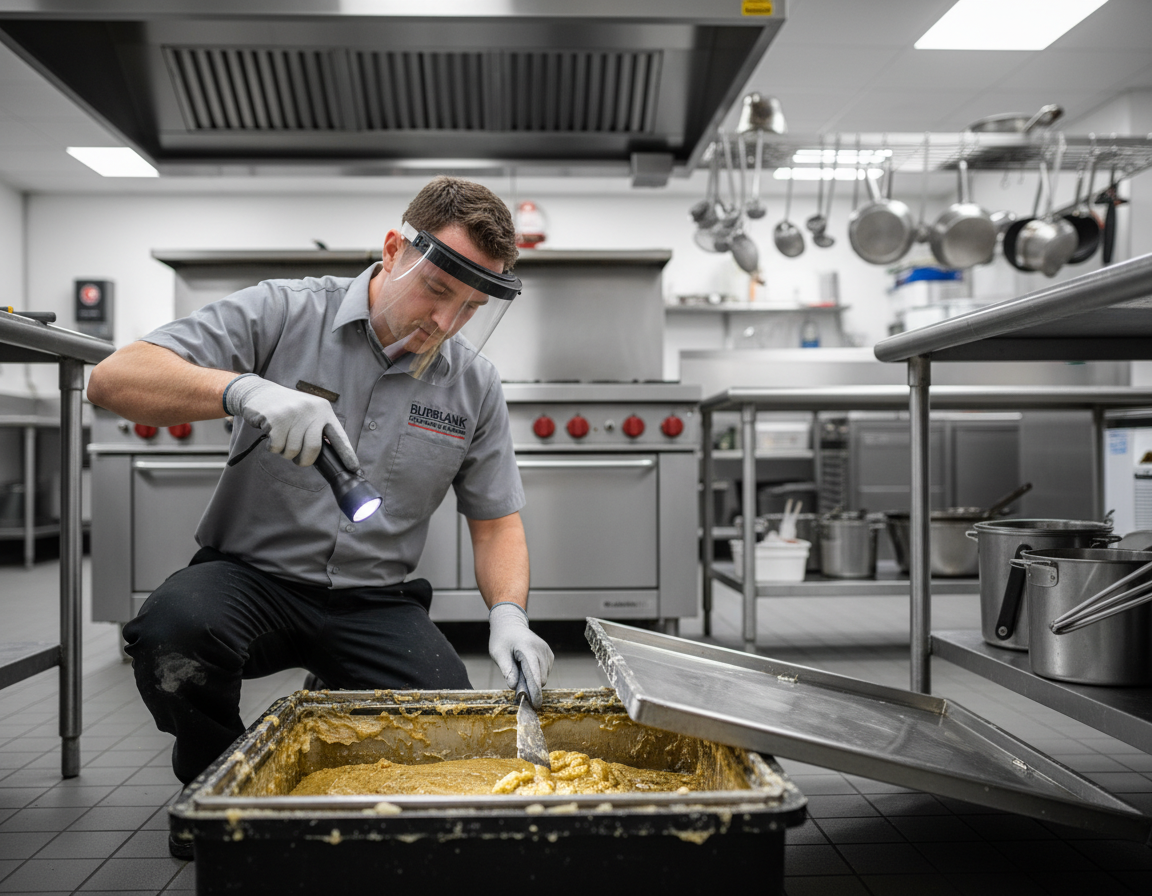
Every service begins with a full evaluation. The technician begins by locating and opening your unit.

We measure the thickness of the built-up FOG layer. This initial assessment is carefully documented. These records are important for your health code compliance documentation. They provide proof of diligent, regular cleaning.

Complete Pump-Out And Scraping

The next step is to deploy our professional vacuum truck. Its powerful equipment evacuates all contents from the chamber. That clears out the floating fats, wastewater, and settled food solids. The result is an completely empty interceptor.

A simple pump-out alone is not sufficient. Our team then manually scrapes the interior baffles clean. That critical trap cleaning step clears away hardened buildup the vacuum cannot reach. It prepares the surface for a deep wash.

Pressure Washing And Final Check

A true professional cleaning depends heavily on high-pressure washing. We scour every interior wall and the floor. This eliminates all traces of grease and harmful biofilm. The chamber is left sanitized and free of odors.

We then carry out an important final inspection. Every inlet and outlet pipe is inspected for hidden blockages. We also inspect the structure for cracks and signs of wear. Confirming structural integrity is critical for long-term operation.

The final step is refilling the unit with clean water to the correct level. This allows it to works perfectly the moment we leave.

From start to finish, this entire grease trap cleaning process takes between 30 and 90 minutes for standard units. Our team is trained to work around your schedule with minimal disruption.

We cause minimal disruption to your kitchen’s flow. You receive full documentation upon completion, proving your system is compliant and ready.

Choosing expert trap cleaning means your equipment will works perfectly. It’s the reliable result you expect from a dedicated local service.

Rely on Grease Cleaning Pros to complete this thorough process. We design every visit to work around your schedule and protect your business.

Understanding And Maintaining Grease Interceptors

When a kitchen’s output demands a more substantial waste containment system, a grease interceptor becomes the essential backbone. Large-scale units like these are vital for operations with heavy daily byproduct output.

Maintaining these systems properly is specialized work. It requires specific knowledge and heavy-duty equipment to perform correctly.

Understanding What A Grease Interceptor Is

Think of a grease interceptor as the large-scale, often underground cousin of the under-sink grease trap. While a standard trap may hold around 50 gallons, an interceptor can hold anywhere from 500 to 5,000 gallons.

It is built to serve full buildings or high-volume operations. High-volume operations like steakhouses, hotels, and food courts frequently depend on this technology.

These grease interceptors are vital for managing significant pomona grease output. They prevent fats and oils from entering the municipal sewer lines.

The way a trap interceptor works is by reducing wastewater flow speed. This gives fats time to cool and rise to the surface so they can separate from the water.

This process helps protect the community’s plumbing infrastructure. It serves as an important first line of defense for our shared environment.

Why Large Interceptors Require Specialized Cleaning

Maintaining these massive units is not a do-it-yourself task. The process involves heavy equipment and certified expertise.

The service process begins by accessing large concrete vaults or metal tanks. Technicians must safely remove heavy manhole covers to get inside.

After access is gained, we deploy an industrial-grade pump truck. This equipment removes thousands of gallons of waste, water, and settled solids.

Inside the system, there are multiple compartments and baffles. Each section requires careful scraping and high-pressure washing.

Comprehensive inspection is one of the most important steps. Our experts inspect inlet and outlet tees, flow control devices, and the structure for cracks.

The inspection also includes checking for groundwater infiltration. That helps ensure structural integrity and reduces environmental risk.

That level of professional maintenance is exactly why these systems need professional care. It involves far more than a basic pump-out.

Even despite regular cleaning in the kitchen, interceptors continue filling at a steady rate. Most of these systems need service every three months.

The highest-volume kitchens, however, may require monthly service. At that level of use, a standard service schedule may not be enough.

Following a strict regular cleaning schedule is non-negotiable. This is what helps stop major system failures that could force a shutdown.

Even more importantly, it helps stop major environmental contamination. The cleanup costs from an event like that are extraordinarily high.

A local expert helps make sure this professional maintenance is completed safely and correctly. They have the proper tools and expertise for your large grease trap interceptor.

Proper care of your grease interceptors is an investment in your business’s continuity and our community’s health. This is a responsibility that should be managed by experienced specialists.

Responsible Used Cooking Oil Collection & Recycling

Once cooking is done, the used oil in your fryer presents an important decision. Responsible recycling transforms a messy liability into something valuable. Unsafe disposal, however, can lead to costly plumbing disasters.

This golden liquid is much more than simple waste. When managed properly, it benefits both your business and the environment.

Working with a dedicated service provider transforms the entire process. You gain a reliable partner for pickup and gain potential financial returns.

Stop Plumbing Problems While Earning Rebates

Dumping used cooking oil down the drain is one of the top causes of blockages. As it cools, it hardens inside the pipes. This creates a stubborn clog that backs up your entire kitchen.

These backups lead to emergency calls, lost revenue, and severe fines. The expense of repairing a serious sewer line failure can be enormous.

A scheduled pickup program eliminates this risk entirely. We provide sealed containers for your cooking oil waste.

We pick it up on a regular schedule designed around your volume. This protects your drains while helping your operation run without interruption.

This service also offers an added benefit: rebates. Your collected used cooking material can carry market value.

Restaurants often earn money or credits according to their recycling volume. This turns a potential waste problem into a modest revenue source.

This proactive strategy benefits everyone. You protect your plumbing and put money back into your business.

From Fryer Waste To Renewable Fuel: The Recycling Process

The journey of your cooking oil is remarkable. Once collected, it is transported to a processing facility.

At that facility, it goes through thorough filtration to remove water and food particles. This purification stage is essential to create a clean base product.

The clean oil then enters a chemical process called transesterification. That process transforms it into biodiesel, which is a clean-burning renewable fuel.

The biodiesel created can help power trucks, equipment, and even heating systems. This means your kitchen’s waste can directly reduce fossil fuel reliance.

The environmental impact is significant. Biodiesel can reduce greenhouse gas emissions by up to 85% compared to traditional diesel.

In addition, every gallon of used cooking oil recycled helps prevent contamination of about one million gallons of water. That helps protect local rivers and watersheds.

Choosing recycling means your kitchen actively contributes to a cleaner local environment. That is a powerful demonstration of the circular economy in action.

Some kitchens try a quick fix for slow drains: pouring hot water down the line. That only melts grease temporarily.

That melted fat just travels deeper into the plumbing. It then cools and hardens into an even more solid, extensive clog.

For pipes already burdened by years of accumulation, a stronger solution is required. That is where hydro jetting becomes essential.

Hydro jetting powerfully removes years of built-up grease, sludge, and debris. It uses a focused stream of water at pressures up to 4000 PSI.

This powerful force scours the interior walls of pipes completely clean. This method is highly effective and works without harsh chemicals.

If your drains stay slow on a regular basis, you may need hydro jetting service. That is the definitive way to restore proper pipe flow.

Implementing a few best practices maximizes your benefits:

  • Use only approved, leak-proof containers for storing used cooking oil.
  • Use strainer baskets in sinks so food solids are caught before entering drains.
  • Do not pour fats or cooking oil down any drain, even floor drains.
  • Work with a certified recycler to ensure correct handling and documentation.

Ready to protect your plumbing and explore possible rebates? Get your quote from our local team today. Our team will build a pickup schedule that transforms your pomona grease output into something beneficial for the community.

Set Up Your Pomona Grease Trap Service Today

Your last service date is more than a simple calendar note. It is a direct sign of your business’s health and safety.

Take a look at your records now. If the record is unclear or more than 90 days old, your grease trap is likely overdue. Don’t wait for a foul odor or a backed-up sink.

Routine, proactive professional cleaning is the smartest and most cost-effective strategy. It helps protect your Pomona restaurant from fines and shutdowns.

Scheduling with Grease Cleaning Pros is simple. Our team works around your operating hours and handles each trap cleaning quickly. Your system works perfectly as soon as we finish.

Our service includes crucial documentation. This makes it easy to meet health inspector documentation requirements.

Ready for peace of mind? Get quote from our friendly team today. We will build a regular maintenance schedule tailored to your kitchen.

You truly need professional service for your pomona grease trap. Trust us as your reliable local partner for every grease trap cleaning need. Get quote now and help secure your business operations right away.

Related: Preparing for Inspections with Grease Trap Pumping Castaic

Why the Flojet Bottled Water Dispenser is a Reliable Choice

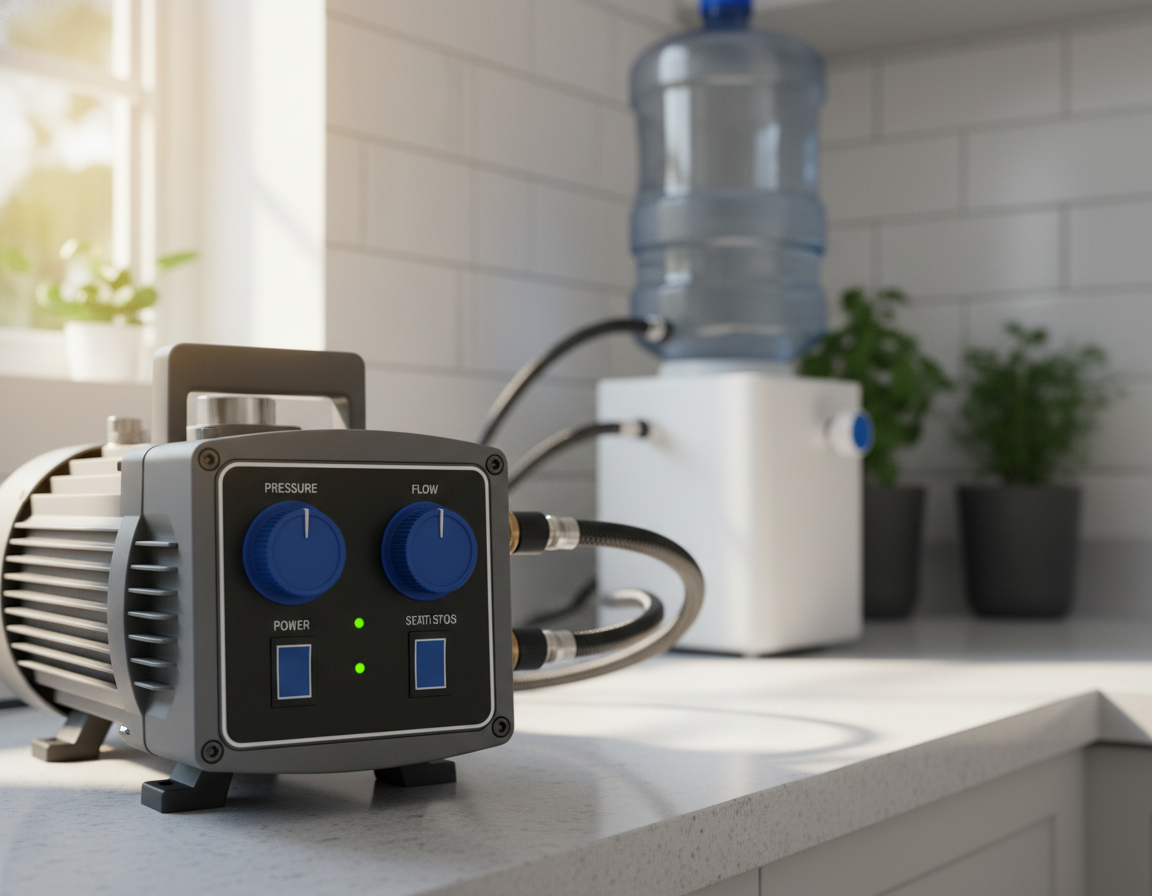
The Flojet Bottled Water Dispenser provides a simple, clean way to hydrate homes and offices without the need for complex plumbing. Models like the flojet bw5000 and other bw5000 flojet variations provide automatic dispensing for 3- to 5-gallon bottles. These units serve as both bottled water coolers and electric water pumps, reducing the need for manual lifting and speeding up service in break rooms and kitchens.

More information about Flojet Pump Parts
Built for office managers, facilities teams, catering staff, and homeowners, this bottled water cooler is valued for its ease of installation and compatibility with standard bottles. Consumer pumps operate on 110–120V AC, consuming about 30–60 W. They come equipped with self-priming motors and automatic pressure switches for reliable, effortless performance.

On the market, similar electric bottled water pump systems are priced around $100–$120 for consumer-grade units. Higher prices apply to dual-outlet or high-flow models. The main benefits include reduced manual handling of heavy bottles, faster access to chilled or ambient water, and enhanced workplace hydration through a compact home water dispenser or a robust office water dispenser setup.

Important Takeaways

  • Flojet Bottled Water Dispenser models, including flojet bw5000, enable quick, plumbing-free hydration.
  • These units fit standard 3–5 gallon bottles and function as a bottled water cooler or automatic water dispenser.
  • Typical consumer pumps run on 110–120V and 30–60 W with features like self-priming and pressure switches.
  • Price points for similar electric bottled water pump systems commonly range around $100–$120.
  • Ideal for homeowners, office managers, and hospitality staff seeking easy installation and reduced bottle handling.

Overview Of Flojet Bottled Water Dispenser Technology And Benefits

Flojet bottled water dispensers efficiently transfer water from 3- to 5-gallon bottles to coolers or taps. They utilize a compact electric drive. The systems employ a sealed diaphragm or piston-driven pump, ensuring self-priming without manual intervention after bottle changes. This design, along with sealed motors and encapsulated windings, shields internal components from moisture, extending their lifespan.

How A Flojet System Works

A Flojet system connects to the bottle via tubing or a neck adapter, drawing water through a check valve to maintain pressure. Many models feature an automatic dispenser control that starts on demand and stops when pressure or tank level reaches a set point. Additional features include dry-run protection and thermal overload safeguards, safeguarding the motor under heavy use.

Flojet Bottled Water Dispenser

Home And Office Benefits

The Flojet Bottled Water Dispenser eliminates the need for heavy lifting and reduces spills, making it perfect for offices and homes. Its bottom-access and plumbed setups keep countertops clear and simplify refills. In busy break rooms and kitchens, it speeds up beverage preparation for coffee and tea, minimizing handling time.

Hygiene is enhanced due to sealed tubing and automatic systems, which minimize contact with bottle necks and spigots. Portable models are ideal for leased spaces and events, while multi-outlet or high-pressure variants handle heavy traffic without additional labor.

Typical Components And Materials Used (Stainless Steel, High-Grade Plastics, Seals)

Wetted pump faces and internal flow paths often feature stainless steel components for corrosion resistance and food safety. The outer housings, crafted from high-grade plastics, meet FDA and NSF standards, reducing weight and resisting impact.

Seals and gaskets, typically made from silicone or rubber elastomers, are strategically placed at motor shafts, housing joints, and inlet/outlet fittings. They ensure a watertight system and withstand temperature fluctuations. Ceramic-coated shafts and hard-coated impellers are used to enhance wear resistance, extending the system’s lifespan under frequent use.

Modular designs facilitate quick flojet parts replacement, such as diaphragms, check valves, and tubing. This approach minimizes downtime and reduces ownership costs over time.

Types Of Flojet Pumps And Model Comparisons

When selecting a pump, consider your flow requirements, available space, and the dispenser’s intended use. Flojet offers a variety of pumps, from high-pressure units for high-traffic areas to compact models for mobility. This guide will help you choose the right pump for your office water dispenser, event cart, or commercial bottled water setup.

High-pressure bottled water pumps provide rapid flow and consistent delivery, ideal for areas with multiple users. These pumps, often rated near 60 PSI, come with an automatic pressure switch for efficient operation. They’re perfect for busy break rooms, cafeterias, gyms, and hospitality settings where reliable hot/cold dispensers are essential. Expect robust construction and self-priming capabilities, though they may generate more noise and consume more energy.

Portable and compact Flojet pumps are designed for smaller spaces, such as kiosks, RVs, labs, and small offices. These pumps prioritize space efficiency and ease of installation. They’re great for field events and temporary hydration stations, with single-inlet designs like the flojet bw5000 series being common.

Pumps with multiple outlets serve multiple dispensing points from a single source, reducing the need for duplicate units. Ideal for schools, large offices, and high-traffic retail areas, these pumps require more complex plumbing and a larger initial layout. Despite this, they offer operational efficiency and consistent pressure across outlets, making them a worthwhile investment.

Integrated-filtration pump systems combine pumping and treatment to enhance water quality. These systems remove chlorine, sediment, and other impurities during dispensing. They’re perfect for healthcare and education settings. While filtration adds maintenance requirements, with cartridges needing replacement every 6–12 months, it slightly reduces maximum flow.

  • Electric water pump options differ by duty cycle and noise level, so choose models rated for continuous use in commercial environments.
  • For heavy demand, bottled water pump commercial models with higher flow and pressure are preferred.
  • For tight spaces, compact Flojet pump models and portable bottled water pump units help simplify installation.

Performance Specs To Review When Choosing A Pump

When selecting a Flojet pump, it’s essential to set clear performance goals. Ensure the pump’s specs align with your dispenser’s use. This ensures the flow and pressure meet your needs without wasting energy. Even small upgrades can significantly enhance the user experience in various settings.

Flow rate (GPM) and matching the pump to demand

The flow rate GPM indicates the speed at which water is dispensed. Home pumps usually operate at 0.2–0.5 GPM, while commercial units can reach 0.5–1.0+ GPM. When choosing, consider the bottled water pump flow and model specifications, such as the flojet bw5000 flow. Assess peak usage scenarios and select a higher GPM for high-traffic areas like gyms or cafeterias to minimize wait times.

PSI ratings for residential and commercial use

PSI ratings are critical for ensuring proper water flow to temperature-controlled tanks and multiple outlets. Residential setups typically require 20–40 PSI, while commercial environments need 40–60 PSI. It’s vital to match the pump’s pressure rating with the dispenser’s design to avoid overpressure or poor flow. This is even more important for systems that handle both hot and cold water.

Noise level and motor design for quiet environments

In quiet environments like offices, clinics, and libraries, noise level is a significant factor. Opt for low-noise Flojet models with sound levels under 45 dB. Features such as vibration isolation, balanced diaphragms, and sealed motors contribute to reduced noise. For extremely quiet environments, consider a quiet water pump or add insulation at the mount.

Energy use and efficiency considerations

Most consumer and small commercial pumps operate in the 30–60 W range on 110–120V AC. Higher flow and pressure rates increase energy consumption. An energy-efficient pump can lower operational costs and reduce waste during idle periods with features like automatic shutoff and thermal protection. Balance the pump’s efficiency with your expected dispense time and daily volume.

  • Match bottled water pump flow to the number of peak users and outlets.
  • Verify PSI ratings against dispenser limits to protect components.
  • In sensitive spaces, prioritize quiet water pump options or low-noise Flojet models.
  • Compare flojet bw5000 flow with flojet energy use when evaluating efficiency.

Maintenance And Repair Basics For Flojet Parts

Regular maintenance of a bottled water dispenser is key to its longevity. A simple routine can prevent costly service calls. Start by inspecting the exterior, bottle neck adapters, and tubing weekly. Sanitize components as recommended by the manufacturer to maintain cleanliness.

Routine water pump maintenance

  • To prevent sediment buildup, clean inlet strainers, bottle fittings, and tubing regularly.
  • Check silicone and rubber seals for brittleness or cracking and replace if worn.
  • In filtered models, replace cartridges every 6–12 months to maintain strong flow and good taste.

Pump troubleshooting and common repairs

Issues like no flow or low flow often stem from bad bottle connections, kinks in tubing, clogged filters, or worn diaphragms. Always check for power and automatic shutoff sensors. Leaks usually result from seals, hose clamps, or fittings; replace damaged gaskets and tighten fittings. Excessive noise or vibration can signal loose mounting hardware, worn diaphragms, or motor bearing issues.

Handling dry-run and overheating issues

  • Dry-run conditions can damage seals and diaphragms, so verify dry-run protection and inspect parts after the event.
  • Overheating may be caused by blocked vents or excessive use beyond the rated duty cycle, so allow the motor to cool and inspect the protection devices.

Usual replacement parts

Common service parts include diaphragms for Flojet, elastomeric seals and gaskets, check valves to prevent backflow, and replacement tubing with compatible fittings. Diaphragms and seals wear out with heavy use or thousands of cycles. Tubing may discolor or harden, requiring replacement when deterioration is evident.

Repair kits and flojet pump repair parts

  • Repair kits often bundle diaphragms, O-rings, and check valves for straightforward field servicing.
  • For correct fit, order flojet pump repair parts that match the model number, pressure and flow ratings, and bottle connection style.

Where to source genuine parts and repair help

For replacement components, choose genuine Flojet parts to ensure material safety for potable water. Installation Parts Supply Flojet parts are available through a plumbing wholesale distributor channel for contractors and facility managers. Authorized Flojet service centers and Installation Parts Supply can offer technical guidance on model compatibility and water dispenser troubleshooting.

Sourcing tips

  • Always reference the serial number and pump model when purchasing flojet parts.
  • Keeping spare diaphragms for Flojet, tubing, and check valves on hand can minimize downtime.
  • To reduce mineral and sediment buildup, use filtered water and lower long-term maintenance requirements.

Commercial And Residential Applications For Bottled Water Dispensers

Flojet pumps are versatile, fitting into various settings where clean drinking water is essential. They power both bottom-load and plumbed bottled water coolers, providing hot and cold water without the need for heavy lifting. This efficiency streamlines beverage preparation, reducing strain on employees and family members alike.

Office water dispenser and break room water cooler installations benefit from high-pressure or multi-outlet pumps in larger settings. For smaller kitchens and shared workspaces, compact pumps are ideal. Regular maintenance ensures the water remains fresh and meets high sanitation standards.

Gym water dispenser stations and school water cooler installations require steady flows and frequent use. Durable, corrosion-resistant materials and scheduled cleaning are essential for these high-traffic areas. This setup supports refill stations in fitness centers, lockers, cafeterias, and hallways effectively.

Retail kiosks and pop-up vendors benefit from compact or multi-outlet bottled water cooler setups. Portable units are perfect for high-traffic points. Event teams rely on a reliable event hydration pump for conferences and outdoor gatherings, ensuring a steady supply of water.

Hospitality teams use a quiet hospitality water pump for catering and guest areas, providing hot and cold drinks without plumbing changes. Portable Flojet-powered dispensers are ideal for catering tents, banquet rooms, and temporary serving lines.

Industrial sites install rugged pumps into an industrial hydration station to reduce heat stress and keep crews hydrated. Some facilities use pumps for non-potable tasks like rinsing tools, where on-demand flow and portability are key.

At home, a home water dispenser or bottled water cooler home offers chilled or heated water without altering plumbing. Countertop and bottom-load systems with a small Flojet pump meet family needs, workshops, and small home offices.

For leased units and temporary needs, Flojet solutions provide a simple leased space water solution. They install and remove without permanent changes. Choosing a temporary water dispenser or bottled water pump home for events and short-term rentals cuts infrastructure costs while maintaining professional service.

  • Office efficiency: reduces downtime during bottle changes and speeds up beverage preparation.
  • High-traffic venues: benefit from high-flow pumps and corrosion-resistant components.
  • Portable applications: support pop-ups, trade shows, and temporary catering setups.
  • Residential convenience: works well in kitchens, workshops, and remote work areas.

How To Choose The Right Flojet Bottled Water Dispenser For Your Needs

Begin by evaluating your demand: consider daily usage, peak hours, and the number of users at once. This will help you determine the necessary flow rate and whether a multi-outlet system is essential. Calculate the gallons per minute (GPM) needed for your busiest hour. This step ensures you select a Flojet Bottled Water Dispenser that meets your needs without overspending.

Next, assess the pressure and location requirements. For residential settings, 20–40 PSI is usually sufficient. Commercial environments often need 40–60 PSI. If noise is a concern in an office or hospitality setting, opt for pumps with a noise level under 45 dB. Also, ensure compatibility with dispenser heads and any temperature control systems you plan to use.

Think about the materials, filtration, and serviceability of the dispenser. Opt for units with stainless steel wetted parts, food-grade plastics, and durable seals to enhance longevity. Consider if integrated filtration is necessary and factor in the cost of filter replacements every 6–12 months. Verify access to genuine Flojet parts, such as diaphragms, seals, check valves, and tubing, from trusted suppliers like Installation Parts Supply for repair kits and technical assistance.

Balance your budget with the total cost of ownership. While many consumer pumps near $100–$120 offer high flow rates, consider long-term expenses like energy use and filter replacements. Cross-check model numbers for accuracy—bw5000 flojet selection is a good example to confirm specifications. When replacing a unit, bring the existing model/serial information to your distributor. Prioritize sealed motors and dry-run protection for reliable, low-maintenance performance suitable for both home and commercial use.

Grease Trap Pumping in Canyon Country Gas Station Convenience Store Combo System Care

Grease Cleaning Pros In Canyon Country proudly serves restaurants, hotels, caterers, and other food-service businesses in the Santa Clarita area. Our crew is focused on providing reliable, efficient, and regulation-conscious grease trap service. We take care of everything from scheduled pumping to emergency service situations.

This webpage is about Grease Cleaning Pros in Canyon Country

Find out more about Grease Cleaning Pros in Stevenson Ranch

Visit the site of Grease Cleaning Pros in Castaic

We deliver an extensive selection of commercial kitchen grease cleaning services. These services include grease removal, pressure washing, hot-water power washing, and oil stain removal for driveways and sidewalks. Plumbing and drain maintenance are also included among our available services.

Canyon Country sees substantial restaurant traffic, resulting in major grease accumulation on paved surfaces. That accumulation can clog drains and create issues with local ordinance compliance. Our prompt local response and trained technicians help ensure compliance, environmental protection, and uninterrupted operations.

The sections below explain why professional grease trap pumping and commercial kitchen grease cleaning matter. We will outline the services Grease Cleaning Pros offers. You will also see how our team upholds regulatory and environmental standards while helping protect your operations.

Why Professional Grease Trap Service Matters For Canyon Country Businesses

Effective grease management is vital for keeping a kitchen clean and operations running smoothly. Restaurants and catering companies in Canyon Country depend on regular grease trap pumping and maintenance. This helps prevent slow drains, unpleasant odors, and compliance problems.

Health, Safety, And Compliance Requirements

Consistent maintenance helps reduce the accumulation of fats, oils, and grease. Such buildup can result in unhealthy and unsanitary conditions. Trained technicians use specialized equipment to remove grease, which helps minimize odors and bacterial growth. Detailed service records help businesses meet inspection requirements and reduce the risk of fines or forced shutdowns.

Operational Continuity And Cost Avoidance

Blocked drains and clogged traps can interrupt service and lead to emergency repairs. Routine pumping helps prevent these issues, protects plumbing, and avoids expensive sewer-line repairs. It also helps preserve concrete and paved surfaces by removing oil stains that may break down materials over time.

Environmental Care And Proper Disposal

Licensed providers make sure waste is collected and treated or recycled in accordance with environmental regulations. This helps prevent illegal dumping and protects storm drains as well as local waterways. Using targeted detergents and hot-water power washing reduces chemical use while improving cleaning efficiency.

Grease Cleaning Pros in Canyon Country

Key Benefit What professional service includes Business result
Cleanliness And Sanitation Health and safety grease removal, odor control, documentation Supports inspections while protecting staff and customers
Dependable Service Routine maintenance and scheduled grease trap pumping Helps reduce downtime and prevent urgent repairs
Cost Management Preventative cleaning extends equipment life Reduce long-term repair and replacement costs
Compliance Environmentally compliant grease disposal and hauling to approved facilities Reduces fines and helps safeguard local waterways

Grease Cleaning Pros In Canyon Country

Grease Cleaning Pros works throughout Canyon Country and nearby Santa Clarita areas. Their focus is on prompt grease trap pumping and ongoing maintenance. This ensures that food-service businesses remain compliant and operations run smoothly. Their local expertise and rapid response are especially valuable to restaurants, hotels, and catering venues.

About The Company

Grease Cleaning Pros proudly serves the community through professional commercial grease cleaning services. Their mission is to offer reliable grease trap pumping, safe waste handling, and thorough cleaning that meets health standards. Fast scheduling, clear estimates, and respectful on-site service are priorities that help minimize disruptions.

Core Services Offered

Regular grease trap pumping and planned maintenance prevent backups by clearing out FOG and solids. Consistent maintenance helps restaurants avoid fines and emergency repair costs.

Concrete surface cleaning and pressure washing remove oil, tire marks, and grime from sidewalks, driveways, and paved surfaces. Hot-water power washing is more effective than cold-pressure methods for heavy grease, mildew, rust, and chewing gum.

Drain cleaning together with water jetting clears blockages and reduces the chance of backups. Video camera inspections reveal pipe conditions so repairs can be more accurately targeted.

All grease waste is collected, transported, and disposed of in accordance with environmental regulations. That protects storm drains while lowering liability risk.

Service Standards And Qualifications

Licensed grease trap technicians arrive in clean uniforms, offer upfront estimates, and maintain accurate service records. They are trained to industry standards and operate various cleaning equipment.

They are known for being punctual, wearing shoe coverings indoors when needed, and using eco-friendly detergents. Cleaning methods are chosen based on site evaluation, ensuring the right technique for the surface and soil type.

Cleaning Service What the service does Business benefit
Grease interceptor pumping Removes fats, oils, grease, and solids from in-ground or interceptor traps Helps prevent blockages, avoid fines, and reduce odors and backups
Pressure washing Uses cold-water cleaning on concrete and paved surfaces Helps restore curb appeal and remove grime and allergens
Hot-water washing Uses heated cleaning for heavy grease, rust, and embedded stains Faster removal of stubborn soils, better sanitizing effect
Drain cleaning & water jetting Clears blockages, while jetting removes roots and grease Helps reduce emergency calls and extend pipe life
Camera inspection Provides a visual diagnosis of pipe condition Supports precise repairs and reduces unnecessary excavation
Grease waste handling Transport and environmentally compliant disposal of grease Helps meet local regulations and lowers environmental risk

How Grease Trap Pumping And Advanced Cleaning Methods Work

Keeping kitchens operating smoothly and sewers flowing clearly is essential. In Canyon Country, grease trap pumping removes fats, oils, and grease before they create backups. Technicians follow a step-by-step routine to empty, clean, and measure grease layers. That process helps determine a pumping schedule suited to each operation.

Understanding Grease Trap Pumping

Grease trap pumping involves the mechanical removal of accumulated FOG and solids from interceptors or traps. Crews open the unit, skim off surface grease, and vacuum out solids that can cause blockages.

Once removal is complete, technicians clean the trap walls and baffles and document grease depth. Proper disposal sends the waste to authorized processing or recycling facilities in compliance with local environmental rules.

When To Use Pressure Washing Or Hot-Water Power Washing

Choosing between pressure washing and power washing depends on the stain type and the surface involved. Cold-pressure cleaning works well for dirt, gum, and light oil on sidewalks and driveways. This method clears grime without the use of heat.

Hot-water power washing is ideal for heavy grease and baked-on soil. Heated water dissolves stubborn fats and kills mildew, making it ideal for commercial kitchen exteriors and heavily soiled pavement.

Professionals review surface type, stain makeup, and runoff regulations. They choose eco-friendly detergents and pressure settings that protect concrete, asphalt, and finished surfaces.

Complementary Plumbing Services

Drain cleaning restores flow when grease or debris clogs lines. For simple blockages, technicians may use mechanical snaking, while water jetting is used for grease attached to pipe walls.

Video camera inspections can reveal hidden buildup, fractures, and root intrusion. Routine maintenance reduces emergency repair needs and helps limit mold and bacteria growth within pipes.

Staff training helps prevention. Simple practices, such as collecting cooking oil for proper disposal, reduce repeat problems and extend the life of traps and lines.

Maintenance Service Best for Typical tools Service frequency
Grease interceptor pumping Built-up FOG and solids in interceptors Vacuum trucks, skimmers, hand tools Monthly to quarterly, site-dependent
Pressure washing General grime, light dirt, and gum on exterior surfaces Surface cleaners and cold-water pressure washers As needed or scheduled maintenance
Hot-water power washing Heavy grease, deep grime, and mildew Heated power washers, eco detergents Periodic deep clean for high-traffic areas
Drain clearing Grease clogs, food particles, and solids Augers, snakes, and water jetting rigs When flow is reduced or on preventive schedule
High-pressure water jetting Heavy grease accumulation inside pipe walls High-pressure water jet units and reels Used seasonally or within preventive maintenance programs
Pipe camera inspection Hidden blockages, grease pockets, and pipe damage Sewer cameras and locating equipment After-cleaning verification or as-needed diagnostics

How To Choose The Right Grease Trap Service In Canyon Country

Picking a reliable grease trap service is vital for keeping kitchens compliant and efficient. Grease Cleaning Pros In Canyon Country stand out because of their local expertise, transparent pricing, and prompt service. They are well suited to the needs of busy restaurants and caterers.

Seek out companies with testimonials from Canyon Country and Santa Clarita businesses. Case studies and verified reviews often show timely service and satisfied commercial customers. Local crews are familiar with municipal regulations and can respond quickly when time is critical.

Transparent Estimates And Maintenance Plans

Ask for detailed estimates that explain grease trap pumping costs, service frequency, cleaning scope, and disposal fees. Whether monthly or quarterly, a regular grease trap maintenance plan helps manage costs and minimize emergency service calls. Be sure to ask about special offers and any service limitations that may impact the job.

Licensing, Insurance, And Environmental Compliance

Ensure the service provider is a licensed grease trap service with certified technicians and adequate insurance. They should follow state and local waste management laws and provide documentation for inspections. Service reports and certificates are essential for protecting your business during compliance audits.

Emergency Service And Fast Response

Opt for providers that promise quick emergency grease service for issues like overflows, backups, or clogged drains. Be sure to confirm expected response times, communication methods, and workmanship guarantees. They should also offer bundled services, such as power washing, camera inspections, and drain cleaning, to solve problems efficiently and reduce downtime.

Conclusion

Maintaining a clean grease system is vital for Canyon Country restaurants and commercial kitchens. Grease Cleaning Pros In Canyon Country provide expert services. They help protect health and safety, meet local regulations, and prevent costly downtime.

They offer a range of services, including routine grease trap pumping and pressure washing. They also handle hot-water power washing for tough buildup, drain cleaning, water jetting, and camera inspections. Responsible grease waste disposal is included, ensuring environmental compliance for all businesses.

Choose a provider with a strong local reputation and transparent pricing. Make sure they have proper licensing and insurance and can provide fast emergency response. If you need dependable grease cleaning in Canyon Country, contact Grease Cleaning Pros In Canyon Country. Schedule a grease trap inspection or create a maintenance plan to protect your operations and extend paved surface life.

Related: Preparing for Inspections with Grease Trap Pumping Castaic

Why a 3 4 Inch Compression Fitting is a DIY Essential

Ever wonder if a 3/4″ copper compression union can seal leaks more quickly than soldering or push-fit repairs? This short introduction presents the 3/4″ Copper Compression Union as a trustworthy, contractor-grade plumbing connector. It works well for both DIY homeowners and professional plumbers. This union delivers a quick solution, frequently avoiding the need for a torch, dedicated solder, or prolonged downtime.

Read more about 3 4 Union Brass
Its design is straightforward, featuring a nut and ferrule to create a tight, leak-proof seal on copper tubing. Because of this simplicity, it remains a favored option and is stocked by wholesalers such as Installation Parts Supply for same-day shipping on urgent repairs.

The following sections explain how the 3/4″ copper compression union works. They will also compare its strengths against brass and push-fit options while outlining step-by-step guidance for a strong, long-lasting connection.

What Is A 3/4″ Copper Compression Union And How It Works

The 3/4 inch copper union is a simple copper pipe fitting that joins two pipe ends of the same nominal size without soldering. It includes a union body, two nuts, and ferrules. That design makes it ideal for repair work, reachable joints, and installations where applying soldering heat is not practical.

Definition of a compression union

This fitting creates a removable mechanical joint by tightening nuts that compress ferrules onto the pipe ends. The ferrules deform slightly and bite the pipe outer diameter, forming a tight seal against the union body. Plumbers use this fitting for quick replacements and serviceable connections in supply lines.

How the compression mechanism forms a leak-proof connection

When each nut is turned, the ferrule is driven inward. It squeezes evenly around the pipe and settles into the union body. Proper alignment and the recommended torque create a leak-proof connection suitable for potable water. Tightening too little risks seepage, while overtightening can distort the ferrule and spoil the seal.

Why copper is chosen: corrosion resistance and long life

Copper’s natural corrosion resistance and dimensional stability give the 3/4 inch copper union long service life. Compared with many plastics and certain metals, copper fittings resist degradation under normal water conditions. This reliability makes copper a preferred material for durable, long-lasting plumbing repairs.

Feature 3/4 inch copper union Common alternative
Material Copper Brass or polymer
Sealing method Ferrule compression for a leak-proof connection Push-fit fittings or soldered joints
Serviceability Can be removed for repairs Push-fit can be removable, while soldered joints are permanent
Corrosion protection High level Varies; brass performs well, some plastics are inert
Typical uses Quick repairs, transitions, accessible joints Extended runs and hidden soldered connections

Copper Compression Union

Why Choose A Copper Pipe Fitting For Repairs

When it comes to plumbing repair parts, the choice is crucial for long-term performance. Copper pipe fittings stand out because of their strength and proven lifespan in both potable water and HVAC systems. A quality copper compression union creates a strong joint that can withstand mechanical stress and normal maintenance demands.

Durable copper union compared with brass and plastic alternatives

Copper unions offer strong mechanical strength and resist deformation when torque is applied. Compared with brass compression couplings from brands like Thrifco Plumbing, copper is generally more compatible with copper pipe systems. Plastic push-fit couplings, while quick to install, lack the heat resistance and long-term durability of copper, especially in high-use or high-temperature settings.

Corrosion-resistant union for long-term reliability

Copper offers strong resistance to common corrosion issues in potable water systems. A corrosion-resistant union can lower the likelihood of pinhole leaks and mineral attack when it is installed correctly and matched with compatible metals. Routine inspections and proper water chemistry are important for helping the fitting deliver a long service life as a dependable plumbing repair part.

Applications that favor copper compression unions

These unions are often preferred for residential potable water lines, HVAC supply and return lines, and commercial work where durability is critical. They work especially well where future service or disassembly is expected, which benefits both contractors and homeowners. Wholesalers like Installation Parts Supply carry contractor-grade copper unions for these typical applications.

Materials, Sizes, And Compatibility Considerations

Material and size are both essential when selecting a plumbing connector. Copper unions are known for their corrosion resistance and clean appearance. Before installation, it is important to verify whether the fitting is sized by nominal pipe size or outside diameter.

Sizing a 3/4 inch copper union is critical, especially when considering IPS or OD standards. A typical 3/4 inch copper union matches 3/4″ IPS, but copper tube is sold according to OD. Always confirm the product specifications and measure the tube OD so you do not run into mismatches in confined areas.

Compression fitting compatibility details can vary by manufacturer and pattern. A large number of compression unions are suitable for hard copper tubing. For PEX or CPVC systems, approved adapter fittings from the piping material’s manufacturer should be used to preserve warranty coverage and code compliance.

The choice between a compression fitting and a soldered or push-fit joint depends on the project’s needs. Compression fittings are ideal for quick repairs, removable joints, or when heat cannot be applied. Soldered connections are best for permanent, tamper-resistant seals in concealed installations. Push-fit fittings are convenient and tool-free, though they can be limited in pressure rating, temperature range, and long-term longevity.

Prior to purchase, make sure the fitting is either short pattern or standard pattern to ensure proper clearance. Measure the nut and ferrule stack, and check whether the product lists compatibility as a specific combination, such as a brass coupling for IPS versus copper OD. This step prevents unnecessary trips and reorders.

Factor Compression Union Soldered Joint Push-Fit
Install speed Fast, tool-limited Slower and requires a torch Fastest option, tool-free
Can it be removed? Can be removed Not removable May be removable depending on model
Best use Repairs, heat-sensitive areas Hidden permanent lines Fast installs, temporary use, or approved applications
Material compatibility Copper tube, with adapters for PEX or CPVC Primarily brass and copper Varies by manufacturer, with some support for PEX and copper
Sizing guidance Verify 3/4 inch copper union sizing (IPS versus OD) Match tube OD and wall thickness Refer to the maker’s sizing guide

Step-By-Step Installation Guide For This Easy Installation Fitting

Follow this clear install guide to fit a 3/4″ copper compression union with confidence. The steps below cover tools, prep, assembly, torque guidance, and leak checking for a reliable plumbing connector job. Parts are available from Installation Parts Supply or local plumbing wholesalers for contractor-grade quality and same-day pickup where offered.

Tools and prep

Collect two adjustable wrenches or a wrench with an adjustable spanner, plus a tube cutter, a deburring tool or file, and a torque wrench if exact tightening is preferred. Purchase ferrules, nuts, and the union body from Installation Parts Supply or a nearby plumbing wholesaler to ensure job compatibility. Have a clean rag and a flashlight nearby.

How to prepare pipe ends and components

Cut the copper pipe square with a tube cutter. Remove burrs and sharp edges with the deburring tool so the ferrule can seat evenly. Make sure the pipe OD is free of oxidation, paint, and debris. Slide the nut onto the pipe with its threaded end facing the union, then place the ferrule on in the proper orientation before inserting the pipe into the union body.

Assembling the compression union

Push the pipe fully into the union body until it seats against the internal stop. Hand-tighten the nuts on both sides to begin. Hold the union body with the adjustable wrenches and tighten the nut carefully. For most fittings, follow the manufacturer’s guidance for the number of turns past finger-tight or use the supplied torque value if one is given.

Torque tips and avoiding common mistakes

Do not overtighten, because too much force can deform the ferrule or pipe and cause leaks. If a torque wrench is available, use the manufacturer’s recommended torque setting. If no torque value is given, tighten in stages: wrench one to one-and-a-quarter turns past finger-tight, then test under pressure. Recheck the connection after the first pressurization.

Leak checking and final steps

Turn the water pressure back on and inspect the joint for visible weeps. A dry cloth or paper towel can help reveal slow leaks around the compression fitting. If a small weep appears, tighten the connection slightly. If the leak persists, relieve system pressure and disassemble the joint to inspect or replace the ferrule and nut before reassembling.

Step Action Tip
1 Source your tools from Installation Parts Supply or a nearby wholesaler Pick contractor-grade ferrules and nuts for longer service life
2 Cut the pipe square and deburr it Clean the OD for a proper ferrule seal
3 Place the nut first, then the ferrule, onto the pipe Follow the manufacturer’s ferrule orientation guidance
4 Push the pipe fully into the 3/4″ copper compression union, then hand-tighten Begin with even hand-tightening on both nuts
Step 5 Wrench tighten to specified turns or torque Do not overtighten, as it can cause deformation
Step 6 Pressurize system and inspect for leaks Use a towel to find slow weeps, and relieve pressure before disassembly

Common Troubleshooting Tips And Quick Connect Fixes

Minor leaks around a compression joint usually appear as a steady drip at the nut or light weeping once the system is under pressure. First make sure the line pressure is off and the work area is dry. Check the pipe end, the nut, and the ferrule for visible damage before deciding the body is the problem.

How to identify and repair minor leaks

For a simple quick connect fix, begin by tightening the nut to the manufacturer’s recommended turns. If leaking continues, shut down the pressure and disassemble the joint. Check the ferrule for nicks, flattening, or distortion, and inspect the nut threads for wear. If the pipe end shows damage, cut it back, deburr it, and reassemble with a fresh ferrule and correct torque to reestablish a leak-proof connection.

Knowing when to replace ferrules or the full fitting

Replace ferrules when they show visible deformation or cuts from installation. If the nut, body, or threads are corroded, stripped, or cracked, replace the whole compression union. Repeated leaks at the same joint suggest a material or alignment issue; consider a higher-grade contractor fitting from a reputable supplier or switching to a soldered joint for a more permanent leak-proof connection.

Preventive maintenance and avoiding overtightening or misalignment

When assembling the joint for the first time, do not overtighten it. Begin by hand, then finish with the recommended torque or the specified turns past finger-tight. Keep pipe ends aligned so the ferrule seats evenly and does not cut at an angle. Inspect joints after installation, then check again under service pressure. Regular checks reduce the need for compression fitting troubleshooting and help catch early signs of wear before a leak develops.

Issue Likely Cause Quick Fix When to Replace
Leak at nut Loose nut or minor ferrule seat error Retighten to manufacturer guidance, then retest under pressure Persistent drip after reassembly
Small leak after installation Pipe misalignment, debris, or an imperfect cut Depressurize the line, re-cut, deburr, and reseat the ferrule Visible ferrule distortion or cuts
Sudden leak under load A cracked nut or stripped threads Replace nut and retest Replace the full fitting if the body or threads are damaged
Repeated leaks same joint Poor alignment or incompatible fitting grade Correct the alignment and tighten to the proper installation torque Use a better-grade fitting or switch to a soldered joint

Buying Guide: Selecting The Right Plumbing Connector From A Wholesale Distributor

Begin with the material specifications and certification details. Ensure the plumbing connector is rated for potable water, has manufacturer certification, and comes with a contractor-grade warranty. Also verify whether the fitting is short pattern or standard pattern and make sure the ferrules and nuts are included. It’s crucial to match the fitting to the pipe OD/IPS before making a purchase to avoid returns.

Pay close attention to corrosion-resistant features and trusted brands such as Mueller Industries, NIBCO, and Viega. In corrosive environments, a durable copper union often outperforms cheaper alternatives. Think about the installation requirements and adapter compatibility, especially in mixed-material systems such as copper-to-PEX.

Installation Parts Supply can speed up job-site procurement by stocking contractor-grade copper unions, ferrules, nuts, and matching adapters. They also offer same-day shipping for in-stock items when a fast turnaround is needed. When placing bulk orders, reach out to sales or customer support and verify part numbers carefully to ensure exact matches.

When judging value, look at lifecycle cost rather than only the upfront price. Brass compression couplings, such as those from Thrifco Plumbing, may appear cheaper online. Even so, the decision should also account for longevity, corrosion resistance, and ongoing maintenance needs. Although the initial price of a copper union may be higher, it may still deliver lower long-term costs in aggressive water environments.

Keep in mind that manufacturer MAP policies may influence the discounts you see online. Retailers may withhold advertised reductions until checkout, so request a final quote for accurate comparisons. Inquire about contractor pricing, returns, and warranty handling from wholesalers to uncover true value.

For a quick comparison, review this short checklist:

  • Material quality and potable water certification
  • Ferrules, nuts, and adapters included
  • Match with the correct pipe OD/IPS
  • Brand reputation and contractor-grade rating
  • Final price after MAP, shipping, and warranties

Utilize this checklist when sourcing from Installation Parts Supply or your local wholesale distributor. This method helps ensure you select a plumbing connector that balances performance, durability, and cost for your project.

Safety, Code Awareness, And Best Practices For Plumbers And DIYers

Any work involving a 3/4″ copper compression union requires careful adherence to safety rules and local regulations. It is important to confirm all required rules before starting the job. Even basic repairs should be handled carefully, particularly when regulated procedures must be followed.

Local code considerations in the United States for these compression fittings

In the United States, local jurisdictions often have their own rules for compression fittings. Many jurisdictions allow these fittings on both cold and hot water lines as long as they are listed for safe use. However, some inspectors may restrict certain ferrule types or require brass components with specific certifications. Before installing a compression union, always check the local plumbing code requirements and confirm what your inspector expects.

Safe handling of copper fittings and working around pressurized systems

Always ensure the line is depressurized and drained before loosening any nut. Wear protective eyewear and cut-resistant gloves when cutting copper pipe. Keep a fire shield and a Class B-C extinguisher nearby if you choose to solder instead of using compression fittings. Even though compression fittings avoid the use of heat, they still require a careful and secure assembly.

When a licensed plumber should be called instead of attempting DIY repair

For tasks involving gas piping, lines that are concealed or hard to reach, or multi-story risers, it’s best to hire a licensed plumber. They can ensure compliance with fitting codes, select the correct materials for safe use, and safely restore pressurized systems.

Situation DIY OK Call a Licensed Plumber
Simple supply-line leak at an easy-to-reach union Usually yes Not usually, unless the leak returns
Repairs inside concealed walls or ceilings Not recommended Yes
Gas piping or combined mechanical systems No Yes
Uncertainty about local compression fitting codes No, verify first Yes
Replacing a basic plumbing repair part such as a ferrule or nut Yes, if proper tools are used Yes, if the repair does not seal properly

Closing Summary

The 3/4″ copper compression union is a durable plumbing connector that works well for a wide range of repair and joining tasks. A corrosion-resistant copper body combined with a correctly installed ferrule helps create a leak-proof connection. That holds true when the pipe ends are properly prepared and the union is tightened to the correct torque.

Selecting a contractor-grade, easy installation fitting from trusted suppliers such as Installation Parts Supply supports dependable part quality. It also makes same-day shipping possible when time matters most. Before buying, compare copper unions against brass compression couplings and push-fit alternatives. Doing so helps determine which option best fits compatibility needs, long-term durability, and the demands of the job.

Always follow local codes and use the proper tools during installation. Inspect the joints after pressurization to confirm a secure, leak-proof connection. If ferrules or fittings show wear, replace them. For repairs outside your comfort level or beyond code limits, calling a licensed plumber is the wise choice. This ensures systems remain safe and compliant.

Related: How To Select Quality 3/8 Copper Flare Fittings For Repairs

How to Install Sanitary Hose Fittings Without Leaks

Consider this: a single microscopic residue left inside a processing line can halt production and cost many thousands of dollars in lost product and cleaning time. This risk makes stainless steel sanitary pipe fittings mission-critical in food, beverage, dairy, and pharmaceutical plants.

Explore more about Tri Clover Sanitary Fittings
Premium sanitary fittings ensure secure connections, reliable sealing, and surfaces that withstand repeated cleaning and inspection. Manufacturers focus on ISO 9001-certified quality systems and tight tolerances. This ensures parts fit, function, and finish as intended.

Choosing sanitary pipe fittings stainless and food-grade pipe fittings prioritizes contamination control, traceability, and ease of maintenance. From tri-clamp and butt-weld fittings to clamps and gaskets, ss sanitary fittings are designed for fast disassembly and thorough cleanability. This keeps lines moving and audits passing.

Why High-Quality Stainless Steel Hygienic Fittings Matter For Food, Beverage, And Pharma

In food, beverage, dairy, and pharmaceutical settings, parts must prevent contamination and maintain traceability. High-quality stainless steel hygienic fittings offer smooth, crevice-free joints and finishes. These features reduce bacterial harboring, making cleaning cycles easier and helping plants meet strict sanitation standards.

Sanitary tubing fittings and food-grade pipe fittings are designed for frequent washdowns and chemical exposure. Their polished surfaces and gasket materials withstand heat and sanitizers, reducing risk during processing and transport. Production teams benefit from fittings that allow for quick disassembly for inspection and cleaning.

Meeting hygiene and safety standards

Facilities depend on fittings that meet FDA, 3-A, and USP contacts for food and pharma contact surfaces. Traceable manufacturing records and ISO 9001 systems support batch recalls and audits. Choosing certified hygienic fittings simplifies validation and keeps operations audit-ready.

Material benefits of stainless steel

Stainless steel provides corrosion resistance and mechanical durability, helping maintain leak-free lines under pressure. It outlasts alternative metals or plastics, preserving product purity. Many plants standardize on stainless for sanitary valves and fittings to simplify inventory.

Quality assurance and certifications

Buyers value suppliers that test surface finish, perform passivation, and provide mill test reports. Independent inspection and certification ensure sanitary tubing fittings meet dimensional and material specs. Fast fulfillment and documented quality build trust with processors who cannot risk downtime.

Tri Clover Sanitary Fittings

Key Types Of Stainless Steel Sanitary Pipe Fittings

For engineers and buyers, understanding common sanitary components is essential. It ensures systems meet the needs of food, beverage, and pharmaceutical industries. The right combination of tri-clamp assemblies, butt-weld joints, valves, and spool elements keeps lines sanitary and leak-free.

Tri-Clamp Fittings, Tri Clover Pipe Fittings, And Triclover Fitting Overview

Tri-clamp fittings are valued for how quickly they can be assembled and taken apart. This makes them ideal for routine cleaning and inspection. A tri clover pipe fittings design includes a ferrule, gasket, and clamp, creating a hygienic seal common in CIP systems.

When choosing tri-clamp fittings, review a detailed catalog. It should list ferrule sizes, clamp styles, and compatible sanitary gaskets. This ensures parts are compatible. The triclover fitting is a popular choice for its fast and repeatable joints.

Butt-Weld Sanitary Fittings And Sanitary Weld Fittings

Butt-weld sanitary fittings form permanent, crevice-free joints when welded to matching pipe. These joints are ideal for applications where microbial traps are a concern and strict surface finish requirements must be met.

Use butt-weld sanitary fittings where a smooth flow path is essential. They are best for applications where frequent disassembly is not required.

Sanitary Valves And Fittings, Sanitary Coupling, And Sanitary Hose Fittings

Sanitary valves and fittings manage flow while protecting product integrity. Common types include ball, butterfly, and diaphragm valves, all made in polished stainless steel.

Sanitary couplings and hose fittings connect flexible lines to rigid piping. It’s important to choose couplings rated for pressure and temperature conditions to avoid failures in process lines.

Sanitary Tubing And Sanitary Spool Components

Sanitary spool tubes and related spool components make it possible to build custom-length runs with welded ends or tri-clamp interfaces. These spool assemblies speed up installation and reduce the need for on-site welding.

Catalogs that combine sanitary spool tubes with matching clamps and fittings simplify ordering. This also enhances traceability for validation files.

Specialized Parts: Clamps, Gaskets, And Sanitary Clamps

Sanitary clamps and gaskets may be small, but they help keep systems sealed and easy to service. The material choice for gaskets affects cleanability and chemical resistance.

A detailed tri-clamp fittings catalog, along with quality clamps, helps prevent downtime. Many buyers appreciate timely shipping and reliable fit from established suppliers when sourcing CSI parts and manufacturer-standard components.

Stainless Steel Sanitary Pipe Fittings

High-quality sanitary pipe fittings are essential for maintaining clean flow, ensuring easy maintenance, and extending the lifespan of systems in the food, beverage, and pharmaceutical sectors. This section delves into the common materials and grades used, the manufacturing processes, and how to select the appropriate fitting for a specific task. It also covers compatibility and the availability of parts.

Commonly Used Materials And Grades

Stainless steel is the preferred choice for sanitary applications due to its corrosion resistance and cleanability. The industry standard includes Types 304 and 316L, with 316L being the preferred option for more aggressive chemistries. For biopharma applications, BPE grade stainless and electropolished finishes are favored for their surface integrity and traceability.

From time to time, copper tri clamp fittings are requested for particular services. It is important to confirm the compatibility of copper parts with the process and ensure sanitary acceptability before installation.

How Manufacturing And Surface Finish Matter

Manufacturing begins with certified raw materials, followed by precision machining, welding, and finishing. Skilled TIG welding and orbital welding are employed to create smooth, crevice-free joints, minimizing contamination risk.

Surface finishing methods include everything from buffed finishes to electropolish. Electropolishing significantly reduces surface roughness, making cleaning easier for stainless steel sanitary fittings and sanitary weld fittings. Quality control measures include dimensional checks, surface roughness testing, and traceable material certificates, such as ISO 9001 paperwork.

Selecting The Right Fitting For Your Application

Choosing the right fitting involves matching it to the pressure, temperature, and media requirements. Stainless steel tube fittings and sanitary pipe fittings serve different purposes; the selection should be based on the connection type and cleanability needs. For instance, tri-clamp style connections facilitate quick disassembly for cleaning, while sanitary weld fittings create permanent, smooth joints.

Consider csi fittings for standardized instrumentation or processes that require interchangeability. Keeping spare parts for pumps, valves, and spools on hand can also reduce downtime.

Compatibility With Sanitary Systems And Availability Of Parts

Compatibility within the system depends on standards and dimensions. Common standards include tri-clamp, DIN, SMS, and ISO. It is essential to verify flange styles and gasket types before ordering to avoid mismatches.

Inventory levels and lead times are critical factors in maintaining uptime. Distributors that stock stainless steel sanitary fittings, sanitary weld fittings, and copper tri clamp fittings can expedite repairs. A clear bill of materials and part numbers ensures quick and accurate fulfillment.

Consideration Typical Material/Grade Why This Matters
General food and beverage Type 304, Type 316L Suitable corrosion resistance and cleanability for most processing needs
Biopharma and high-hygiene applications Electropolished 316L, BPE grade stainless Supports traceability while reducing contamination risk through smoother surfaces
Permanent welded runs 316L paired with sanitary weld fittings Smooth flow, crevice-free joints, and low maintenance
Quick disconnect applications Tri-clamp style, stainless or copper tri clamp fittings Fast cleaning and replacement; check material compatibility
Instrumentation and specialized systems Precision tube fittings and CSI fittings Standardized interfaces, easy integration with existing systems

How To Source And Work With A Reliable Plumbing Wholesale Distributor

The right plumbing wholesale distributor plays a critical role in uptime and regulatory compliance. Look for a partner with a wide range of sanitary fittings and transparent product information. This includes tri-clamp, butt-weld, and spool components. Quick delivery and clear communication are essential to minimize downtime on food, beverage, and pharmaceutical production lines.

Distributors should carry certified stainless steel clamp fittings as well as sanitary valves and fittings. They should also have traceable batch records. ISO 9001-certified manufacturers ensure consistent quality and can fabricate parts to match factory specifications.

Customer reviews are a good indicator of a distributor’s lead times and shipping performance. Opt for a distributor that offers fast next-day fulfillment or reliable short lead times. A distributor that promises rapid delivery should also provide inventory visibility and proactive order updates.

Examine their testing and traceability practices. Request material certificates, surface finish data, and weld inspection records. Clear documentation is vital for audits and maintaining systems free from contamination risks.

Choosing sanitary coupling types, clamps, and gaskets requires strong technical support. A knowledgeable team can guide you in choosing the right size, finish, and sealing option for CIP systems. They should also offer custom fabrication for unique spool or adapter pieces.

As a plumbing wholesale distributor, Installation Parts Supply stands out for its wide selection of stainless steel sanitary pipe fittings. They offer responsive service and access to certified suppliers. Their catalog includes a variety of sanitary fittings, such as tri-clamp, sanitary coupling, clamps, and sanitary valves and fittings, catering to processors across the United States.

Buying Criterion What to Expect Why This Matters
Inventory Range Full sanitary fittings catalog and stocked stainless steel clamp fittings Faster fulfillment and fewer production delays
Quality Records Material certs, weld reports, ISO 9001 traceability Helps support audits and maintain hygienic integrity
Shipping and Lead Time Reliable carriers, tracking visibility, and next-day options Helps reduce downtime and costly emergency sourcing
Technical Guidance Application guidance, custom fabrication, spec sheets Supports correct component selection for strong system performance
Breadth of Products Tri-clamp, butt-weld, spool tubes, clamps, gaskets, sanitary valves and fittings Provides single-source convenience for full system builds
Reputation Customer reviews, case studies, references Shows proven delivery performance and consistent service

Closing Summary

High-quality sanitary fittings are critical in food, beverage, dairy, and pharmaceutical processing. They ensure uptime and safety. Stainless steel hygienic fittings offer crevice-free surfaces, reliable sealing, and easy cleaning. Types like tri-clamp, butt-weld, and spool tube assemblies provide secure connections and meet strict hygiene standards.

Careful consideration is required when choosing sanitary tubing fittings and ss sanitary fittings. Material grade, surface finish, and certified manufacturing are key. Suppliers with ISO 9001 processes and traceability ensure part performance. This validation is essential for audits and daily operations.

Work with a distributor that provides verified inventory, fast fulfillment, and technical support. Installation Parts Supply is a U.S. supplier that meets these criteria. They provide stocked product, testing documentation, and custom fabrication. This ensures lines run smoothly and comply with regulations. Sourcing sanitary valves and fittings carefully protects product safety and operational efficiency.

Related: Troubleshooting a Stuck Swivel Nut-Knurled Fitting

Grease Trap Pumping in Burbank Asian Cuisine Restaurants Frequent Pumping Requirements

Grease Cleaning Pros In Burbank proudly delivers professional grease trap cleaning and pumping services. Our team serves restaurants, cafes, and commercial kitchens in Burbank. We focus on efficient, dependable service that keeps kitchens sanitary and operations running smoothly.

Explore more about Grease Cleaning Pros in Burbank

This resource is about Grease Cleaning Pros in Calabasas

Read more about Grease Cleaning Pros in Canoga Park

We serve kitchens with both small and high-capacity grease requirements. Our Burbank grease services include routine maintenance, emergency pumping, and full interceptor services. They are built to reduce backups and support health code compliance.

For a quick, free quote, call 708-328-5059 for Burbank, IL, or 626-642-5622 for Burbank, CA. Count on Grease Cleaning Pros In Burbank for dependable grease trap and interceptor services. That service helps safeguard your kitchen and reputation.

Why Expert Grease Trap Services Matter For Burbank Businesses

Maintaining kitchens involves much more than just clean dishes. Regular grease trap maintenance and Grease Trap Pumping help protect public health and keep operations running. Local companies like Grease Cleaning Pros In Burbank provide scheduled services that align with busy schedules.

Health And Regulatory Compliance

Routine maintenance helps prevent fats, oils, and grease buildup, reducing the risk of health code violations. Keeping detailed maintenance records simplifies inspections. During grease interceptor maintenance, certified crews work in line with local and state sanitary codes.

Preventing Sewer Backups And Costly Repairs

Clogged lines can cause backups, halting service and leading to expensive repairs. Timely maintenance removes solids and scum before they solidify in pipes. Investing in routine Grease Trap Pumping extends the life of traps and sewer lines while lowering long-term costs.

Keeping Operations Running And Odors Under Control

Unpleasant smells and slow drains can upset customers and staff. Scheduled grease interceptor maintenance helps reduce odors and limit emergency calls. Grease Cleaning Pros In Burbank provides flexible scheduling and fast response so restaurants, hotels, schools, and processing plants can operate without interruption.

Main Benefit What professional service provides Impact on business
Health code compliance Scheduled cleaning, documentation, and certified waste disposal Reduced violations, smoother inspections, and improved public safety
Fewer backups Grease Trap Pumping with line inspections Lower repair costs, less downtime, longer equipment life
Odor control and hygiene Internal cleaning, deodorizing, and routine maintenance Improved customer experience, healthier work environment
Operational flexibility After-hours service and emergency response Less service disruption and faster recovery from incidents
Environmental and disposal compliance Proper waste transport plus disposal documentation Supports state and local compliance while avoiding fines and shutdowns

Grease Cleaning Pros in Burbank

Grease Cleaning Pros In Burbank

Grease Cleaning Pros In Burbank focuses on reliable maintenance for restaurants and large commercial kitchens. They provide quality work that keeps kitchens efficient, reduces odors, and helps prevent costly backups. Their flexible scheduling and experienced technicians aim to minimize disruption during peak service hours.

Company Overview And Service Promise

Grease Cleaning Pros In Burbank is an experienced company serving both Burbank, IL, and Burbank, CA. The technicians use reliable methods to remove solids, fats, oil, and grease. They deliver punctual service, thorough cleaning, and detailed reporting after every visit.

Primary Services Offered

Scheduled grease trap pumping and interceptor cleaning are offered to prevent clogs and foul smells. They also provide emergency grease trap cleaning for urgent issues. These regular maintenance plans reduce long-term costs and help extend equipment life.

Their services include waste removal, detailed internal scraping, and proper disposal that follows local regulations. Small cafés and large kitchens alike receive the same careful attention and service quality.

Service Area And Contact Details

They serve local Burbank businesses in both Illinois and California, with quick response times for same-day needs. To get a fast free quote, call 708-328-5059 for Burbank, IL, or 626-642-5622 for Burbank, CA. Their staff can arrange follow-up visits and ongoing maintenance plans matched to each facility’s specific needs.

Grease Trap Pumping And Interceptor Cleaning Overview

Knowing how grease removal works is key to keeping kitchens compliant and efficient. Grease Trap Pumping and interceptor cleaning help restore capacity, reduce odor risks, and prevent fats, oils, and grease (FOG) from reaching the drains. Grease Cleaning Pros In Burbank uses on-site assessments to recommend the right pumping frequency for each location.

What does grease trap pumping involve?

Grease trap pumping involves removing accumulated grease, food solids, and wastewater from under-sink or in-ground traps. It is carried out using vacuum trucks or specialized pump equipment. This clears the unit so it can capture FOG again and prevent discharge into municipal sewers.

Differences between grease traps and interceptors

Grease traps are smaller units installed inside or near kitchens for low-flow environments. Interceptors, on the other hand, are larger and often installed outdoors or underground. These units are intended for high-volume sites like large restaurants and food processing facilities.

The scale of grease interceptor pumping is greater. Interceptors hold more FOG and solids, requiring more thorough cleaning steps and heavier equipment. This is necessary to meet health and plumbing codes.

How often service should be scheduled

The required pumping frequency varies according to facility size, FOG output, and local regulations. Many eateries require service monthly to quarterly. High-volume kitchens and larger interceptors often require shorter service intervals and closer monitoring.

Grease Cleaning Pros In Burbank uses inspections to create a customized service schedule. That schedule is matched to usage and compliance needs, helping managers avoid backups and fines.

Services Tailored To Industries In Burbank

Local businesses receive customized service from Grease Cleaning Pros In Burbank. Each industry has its own grease production demands, which leads to different service plans. These plans account for scheduling, equipment, and reporting requirements. The aim is to ensure kitchens remain compliant and operations flow smoothly.

Restaurants, Cafes, And Quick-Service Chains

High-volume kitchens generate significant amounts of fats, oils, and grease. That buildup can lead to blocked drains and health code issues. Routine grease trap pumping helps prevent these issues and provides needed documentation for inspections. Technicians also provide emergency service and flexible scheduling to minimize disruptions.

Commercial Kitchens, Hotels, And Hospitality

Hotels and large hospitality operations need robust grease interceptor cleaning and maintenance. Grease Cleaning Pros In Burbank handles these needs with routine checks and thorough cleaning. Their service helps resorts, banquet halls, and catering venues continue operating without interruption.

Food Processing Plants, Schools, And Institutional Kitchens

Facilities with heavy production levels must meet strict environmental and health standards. Maintenance for institutional kitchens includes heavy solids removal, grease capture, and proper waste disposal. Teams work with school districts, university dining services, and food manufacturers to meet these standards.

Services also extend to special events, military bases, and temporary catering setups. Customized plans combine commercial kitchen grease cleaning, scheduled pumping, and targeted maintenance. This approach adapts to the diverse needs of different sectors.

What Happens During A Professional Grease Service Visit

When the Grease Cleaning Pros In Burbank crew arrives, they begin with a detailed inspection and planning process. They conduct a grease trap inspection to assess buildup, examine baffles and seals, and measure solid levels. This step helps determine if a standard pump or a more intensive clean is needed.

Technicians then select the proper equipment based on the assessment. For major buildup, they use a vacuum truck. For smaller, tighter spaces, a portable pump and hand tools are employed. Safety equipment and containment measures are used to protect staff and your kitchen during the service.

The core of the visit is grease trap pumping. Crews remove grease and solids, then scrape and wash the trap walls when necessary. They also clear debris from inlet and outlet lines to restore proper flow and help prevent backups.

Waste removal is done with strict adherence to regulations. Collected waste is transported to licensed facilities to meet waste disposal standards. The team documents volumes and disposal details to satisfy local health and environmental regulations.

After service is completed, you receive a detailed report. It lists the volumes removed, the service date, and any recommended repairs. That documentation supports regulatory records and makes permit inspections easier.

Grease Cleaning Pros In Burbank offers follow-up scheduling and maintenance plans. Routine visits and emergency response options help minimize downtime and keep your kitchen operating efficiently.

Why Choose Grease Cleaning Pros: Pricing, Reliability, And Guarantees

Choosing the right service team is critical for uptime, compliance, and long-term cost control. Grease Cleaning Pros In Burbank offers clear service options. This allows managers to plan maintenance with confidence. Below are the core points to weigh when choosing a provider for routine Grease Trap Pumping and emergency response.

Transparent Service Pricing And Free Quotes

Understanding costs upfront makes maintenance budgeting easier. Grease Cleaning Pros In Burbank provides clear grease service pricing along with a free grease trap quote. Quotes can be requested by phone or on-site. Pricing tiers include routine pumping, deep cleaning, and interceptor work so businesses can compare options.

Skilled Technicians And Flexible Scheduling

Experienced staff helps reduce downtime and protect equipment life. The crew includes experienced grease technicians who service both small traps and large interceptors with the same level of care. Flexible scheduling works around business hours to avoid rush periods. Emergency response is available whenever blockages threaten operations.

Environmental Compliance And Disposal Guarantees

Correct waste handling supports permit compliance and reduces the risk of fines. Each job completed by Grease Cleaning Pros In Burbank includes disposal compliance documentation. They transport pumped waste to permitted facilities. Customers receive certification of service and supporting records for inspections and local reporting.

Offered Service What Is Included Main Benefit
Scheduled Grease Trap Pumping Scheduled pump-outs, basic cleaning, and service log Lower backup risk and longer equipment life
Deep Cleaning & Interceptor Service Complete scrape, degreasing, and inspection reporting Better flow and earlier repair detection
Emergency grease response Rapid dispatch, on-site fixes, temporary measures Reduced downtime during urgent events
Service documentation and compliance records Disposal manifests, certification, maintenance history Useful for audits and local regulatory compliance

Final Thoughts

Regular grease trap pumping and planned grease interceptor maintenance are critical to maintaining high sanitation standards in commercial kitchens. This practice prevents costly plumbing failures. For restaurants, hotels, schools, and food processors in Burbank, professional services ensure health code compliance. They also prevent sewer backups and control persistent odors that disrupt operations.

Grease Cleaning Pros In Burbank provides dependable grease trap cleaning and interceptor pumping services. Their service includes compliant waste disposal, free quotes, and flexible scheduling customized for each facility. Their approach supports both everyday kitchen performance and long-term equipment protection. That reduces repair expenses while lowering environmental risk.

Protect your business by scheduling grease service now and making routine inspections part of your maintenance plan. Call 708-328-5059 for Burbank, IL or 626-642-5622 for Burbank, CA to request a free quote. Set up tailored grease trap pumping and grease interceptor maintenance to keep your commercial kitchen sanitation plan on track.

Related: Preparing for Inspections with Grease Trap Pumping Castaic

Basement Remodeling Seattle Designs For Creative Hobby Rooms

A finished basement can expand a Seattle home’s usable square footage by up to 30%, which surprises many homeowners. It can also recover a meaningful share of its cost at resale. This makes basement remodeling in Seattle a wise choice for families needing more space or looking to earn rental income.

Continue reading about Home Remodeling Seattle

Continue reading about Basement Remodeling Seattle

Learn more about Home Remodeling Kirkland WA

Imagine transforming your basement into a cozy family room, a private guest suite, or a home office. A thoughtfully planned seattle basement renovation can convert unused square footage into space you use every day. Many projects are finished within 4–8 weeks. Still, projects that include bathrooms or bedrooms often take longer and cost more.

Working with experienced teams helps keep the process smooth. Professional basement remodel seattle contractors conduct thorough checks for water, ceiling height, egress windows, and utilities. That makes sure the completed area is safe, attractive, and durable.

Before moving forward, weigh your personal goals alongside the property’s resale potential. Choosing the right basement remodeling services seattle will help you add features like a bathroom, wet bar, or an extra bedroom without overspending.

Basement Remodeling In Seattle

Transforming a dim, unused basement into a vibrant living space is a wise choice for Seattle homeowners. A finished basement creates more living area without expanding the home’s footprint. It also enhances resale value and can generate rental income if designed correctly. Many homeowners want a legal bedroom, a full bathroom, and a small kitchen or wet bar.

Experts in basement renovation in Seattle emphasize the importance of a detailed assessment. It is important to inspect for moisture, confirm proper drainage, and identify structural or mechanical constraints. Handling these concerns early helps prevent delays and keeps the remodel on schedule. Complete trade-involved remodels often take around four to eight weeks.

In Seattle, basement remodeling is particularly appealing because many properties sit on urban lots. It allows homeowners to add space without altering the yard or curb. Features like improved insulation, vapor barriers, and energy-efficient lighting make the space more comfortable and appealing during Seattle’s rainy months.

If you are searching for the best basement remodelers in Seattle, prioritize contractors who know how to handle permits and local codes. Skilled teams handle framing, electrical, and plumbing work while ensuring inspections are coordinated. That approach helps prevent surprises and ensures the finished space meets rental or resale standards.

Well-planned renovations can turn storage zones or mechanical rooms into family spaces, offices, or rental suites. Selecting the right fixtures, durable flooring, and moisture control strategies ensures the space is usable throughout the year. Experts recommend using proven materials and ventilation to extend the life of finishes.

Project Step Local Focus Typical Timeframe
Initial assessment Moisture, foundation, and mechanical layout 1–3 days
Permit and design Seattle code review for plumbing and egress 1–3 weeks
Rough trades Electrical, framing, plumbing, and HVAC adjustments 1–3 weeks
Finishes Drywall, insulation, flooring, and fixtures 1–2 weeks
Final inspections Bedrooms and bathrooms code compliance 1–2 days

Basement Remodeling Seattle WA

Planning Your Seattle Basement Renovation: Assessments And Goals

A well-thought-out plan is key to a successful project. The first step is a detailed evaluation of the space. Then, set goals that align with your needs and budget. Early decisions significantly impact the outcome, affecting both livability and resale value.

Initial Site Assessment Essentials

Check for water stains, mold, and cracks in the foundation before the design phase begins. Review the ceiling height, current windows, and egress routes. Confirm that the basement can satisfy code requirements for bedrooms or rental units.

Identify the locations of HVAC, plumbing, and electrical systems. Locate load-bearing walls and support posts to plan safely. Take note of any slope or drainage concerns that may affect moisture control.

Setting Clear Project Goals And Scope

Decide on the primary use: bedroom, full suite, family room, home gym, or mixed-use space. Prioritize important elements such as egress windows for bedrooms, durable materials for damp environments, and proper ventilation.

Balance features for daily enjoyment with those that add value for resale. Consulting with professional contractors in Seattle can help refine your scope and provide realistic cost estimates.

Budgeting And Seattle Basement Remodel Cost Expectations

A successful basement remodel starts with a well-defined budget and realistic cost expectations. Projects may range from basic rec rooms to full suites with both a bathroom and bedroom. Knowing the main cost factors helps homeowners make choices that stay within their budget.

Typical Cost Drivers For Basement Remodels

The size and scope of the remodel have a major impact on cost. Adding a bedroom and full bathroom increases material and labor expenses. High-end finishes, custom millwork, and built-in cabinetry also raise costs.

Hidden issues can impact budgets. Moisture mitigation, drainage upgrades, and structural repairs can add significant expense. Moving electrical or plumbing lines adds both time and labor costs.

Features and upgrades also affect the budget. Popular Seattle upgrades such as wet bars, kitchenettes, soundproofing, and specialty lighting tend to increase costs. A finished basement can add value, but ROI depends on local demand and work quality.

Budget Planning Tips And Contingencies

Use tiered pricing to establish realistic expectations. Set up basic, mid-range, and premium budgets so you can compare choices. Many homeowners keep costs manageable by selecting durable and cost-effective finishes.

Include all line items in estimates. Labor, materials, flooring, windows, electrical, plumbing, drywall, paint, fixtures, tile, millwork, and a 2-year construction warranty should be listed. Add design fees of about 6%–8% and a buffer for sales tax, permit fees, and appliances.

Plan for contingencies. Set aside approximately 20% of the budget to cover unforeseen work and schedule delays. Try to secure a fixed-price contract with a detailed scope of work. Design-build firms and top basement contractors seattle often provide pricing guides and permit assistance.

Price Tier Typical Range Common Features When to Choose
Basic $15,000 – $35,000 Open rec space, basic flooring, simple lighting, no full bath Budget-conscious updates or rental-ready spaces
Mid-range $35,000 – $80,000 Finished rooms, upgraded flooring, full bathroom, modest millwork Homeowners seeking more living space with solid finishes
High-end $80,000+ Premium finishes, custom cabinetry, structural modifications, kitchenette High-end suites or extensive layout changes

Typical timelines for complete remodels are 4–8 weeks. Basement projects with both a bathroom and bedroom often begin at about $50,000 and rise based on scope. A number of contractors in Seattle offer free consultations to sharpen estimates and discuss permit requirements.

Comparing bids from at least three reputable firms highlights realistic pricing and trade-offs. Look for detailed scopes from top basement contractors seattle and prioritize firms with transparent estimates to minimize surprises.

Design And Material Choices For Durable Seattle Basements

Selecting the proper materials is critical when building a basement that can stay durable and practical in Seattle’s humid conditions. A thoughtful design should balance warmth, moisture control, and ease of maintenance. These considerations safeguard your investment and ensure the space remains healthy throughout the year.

Flooring Options Suited To Damp Climates

Luxury vinyl plank stands out as a top choice for basements prone to moisture. It is water-resistant, easy to clean, and offers the look of wood.

Another moisture-resistant and durable option for bathrooms and wet bars is ceramic or porcelain tile. Concrete installed over a moisture barrier provides a sturdy, modern option that can be sealed or stained for added style.

Unless robust moisture control and elevated subfloors are used, traditional hardwood is usually not advised. Choosing flooring based on use and foot traffic helps a professional remodel in Seattle deliver long-lasting results.

Wall, Insulation, And Ventilation Strategies

Using moisture-resistant drywall or cement board in high-risk areas helps reduce mold concerns. Combine these with closed-cell spray foam or mineral wool insulation for thermal and sound benefits.

Ventilation is critical for Seattle basements. Mechanical systems like energy-recovery ventilators, air exchangers, and dehumidifiers manage humidity. Window fans can also be effective when weather and conditions make them practical.

Heating options include extending central HVAC, ductless mini-splits, wall-mounted electric heaters, or hot-water baseboards. Durable bathroom fixtures and solid-wood cabinetry with strong joinery and hardware also enhance longevity under humid conditions.

Working with experienced teams helps ensure materials fit both the budget and the climate. Choose basement remodeling services in Seattle that can offer tailored plans and affordable finishing while maintaining quality. The right contractor will translate those material selections into a stylish, practical basement finished to professional standards.

Hiring Top Basement Contractors And Remodelers In Seattle

Choosing the right team is essential for a successful basement remodel. Look for contractors with Seattle experience, clear timelines, and straightforward pricing. A design-build firm can streamline communication, reduce delays, and handle permits and inspections for you.

What To Look For In A Professional Basement Remodel Team

Ensure the contractors are licensed, insured, and have a local project history. Request Seattle-area references and recent portfolios that highlight moisture-resistant finishes and smart layouts. Opt for teams that manage all trades and offer a fixed-price contract with a detailed scope of work.

Pick contractors who can clearly walk you through permit timelines and inspection steps for Seattle and King County. Look for companies that offer published warranty policies and use reputable material brands. This strategy reduces risk and helps protect your investment.

Questions To Ask Prospective Contractors

Have a clear set of questions ready when speaking with contractors. Be sure to ask if they handle Seattle permits and inspections, offer fixed-price contracts, and what their usual timeline and warranty policy look like.

Request a complete cost breakdown covering labor, materials, and contingency allowances. Request references from recent projects and examples showing how they handled damp or uneven basements. Make sure you know the primary contact person and how change orders will be handled.

Selection Factor What to Request Why it Matters
Experience with Seattle basements Portfolio, neighborhood references, recent project photos Demonstrates familiarity with local code, soil, and moisture control
Permitting and inspections Written plan for permits, inspection timeline, permit fee estimate Supports compliance and reduces the risk of costly rework
Contract and pricing Fixed-price contract, detailed scope, payment schedule Helps reduce surprises and clearly defines responsibilities
Project management Assigned project manager, communication plan, weekly updates Keeps schedule on track and improves coordination
Warranty and post-completion support Contact for warranty service, written warranty terms Protects against defects and follow-up issues
Reputation and reviews Better Business Bureau, online reviews, trade references Reflects consistent quality and customer service

Seattle homeowners often compare the best basement remodelers seattle and the top basement contractors seattle to find the right fit. Talk with seattle basement renovation experts for a consultation and ask for a detailed estimate and schedule before making your decision.

Value-Adding Features And Layout Ideas For Seattle Basements

Transforming a neglected cellar into a vibrant, income-generating area is achievable with strategic upgrades. Design choices that blend with the upper floors can improve the home’s overall feel. Homeowners in Seattle often collaborate with experts to ensure compliance with codes, improve comfort, and increase resale value.

A legal bedroom with an egress window can significantly increase usable living space while staying compliant with safety rules. Adding a full bathroom on the same level enhances the property’s appeal and supports its rental viability.

A wet bar or kitchenette can make the basement more useful for entertaining or for tenant comfort. Premium finishes such as luxury vinyl plank or engineered hardwood, paired with custom millwork, can significantly improve the property’s perceived value.

Adding smart storage, built-in cabinetry, and efficient lighting can reduce clutter and create a polished appearance. Contractors specializing in basement remodeling in Seattle focus on these elements to maximize the return on investment.

Popular layout concepts

A guest suite with its own bathroom works well for families and short-term rentals, making it attractive for flexible living arrangements. This type of layout is popular with buyers who want adaptable living space.

Open family or media rooms paired with a wet bar create an inviting space for entertainment. Incorporating acoustic treatments and zoned lighting can achieve a cinematic atmosphere.

Home offices or private gyms require dedicated ventilation and bright task lighting. Planning the electrical and plumbing layout thoughtfully during the remodel can help avoid costly later adjustments.

Feature Benefit Typical Cost Range
Legal bedroom and egress window Adds safe living space and supports ADU or rental use $3,000 – $8,000
Full bathroom Improves usability and rental appeal $10,000 – $25,000
Wet bar / kitchenette Enhances entertaining and tenant convenience $5,000 – $15,000
High-quality flooring & finishes Increases perceived value and durability in damp climates $4,000 – $12,000
Custom storage & millwork Enhances organization and visual appeal $2,500 – $9,000

Collaborating with experienced basement renovation teams in Seattle can help keep your project aligned with zoning regulations. A careful plan helps ensure insulation, framing, electrical, and plumbing work are completed on time. Proper permits and guidance from experts make the space safe, comfortable, and ready for use.

Project Timeline, Permitting, And Quality Assurance For Seattle Remodels

Start with a realistic schedule for your basement remodel in Seattle. Most projects take 4–8 weeks. Larger remodels or projects that add bathrooms and bedrooms may take longer. Delays can stem from weather, permit processing, material lead times, and unexpected issues like moisture or structural repairs.

Permitting is a critical factor in your project timeline. Seattle often requires permits for significant changes, including new bedrooms and bathrooms. Permit processing may add days or weeks to the schedule. Homeowners may opt for design-build firms or experienced contractors to handle permits and inspections. Including permit fees and inspection milestones in the budget is a wise way to reduce surprises.

Strong quality assurance is important from start to finish. Ensure that all systems, including egress windows and plumbing, meet Seattle’s building codes. Top contractors often offer warranties, staged inspections, and fixed-price contracts with clear scopes. It is common to see a two-year warranty on construction items. The final walkthrough is important for verifying workmanship and ensuring code compliance.

Look for firms that provide complete basement remodeling services with project management and warranty-backed construction. Detailed completion punch lists, documented inspections, and clear schedules all help safeguard the investment. For example, Renovate Builders offers tailored services for Seattle homes that include permit handling and warranty-backed project delivery.

Related: Remodeling Maple Valley Wa: Media Room Design

Preparing Your Exterior for Outdoor Stairlifts Long Island Installation

Roughly one out of every four Americans older than 65 will experience a temporary mobility limitation this year. For numerous Long Island homeowners, a rented stairlift can be the quickest and most practical solution. Rental Stairlifts Long Island can deliver a lower-cost, flexible path back to independence after surgery, during recovery from illness, or while testing equipment before purchase.

This site is about Stair Glides

This webpage is about Acorn Stairlifts Near Me Long Island

Stairglider.net along with other local companies provide a range of options to suit a wide range of homes and mobility requirements. Common long island rental equipment includes straight stairlifts, curved stairlifts, and outdoor stairlifts built for coastal weather. Many rental models come with swivel seats, safety sensors, armrest controls, foldable seats and footrests, battery-powered operation for outages, and vertical rails mounted directly to stair treads — capabilities referenced in Lifeway Mobility materials and standard among mobility solutions Long Island.

Affordable stairlift rentals give homeowners a practical short-term option without the upfront cost of buying. This article will explain benefits, local provider coverage, installation and maintenance, costs and leasing choices, and how to select the right unit for your home.

Why Rent Stairlifts On Long Island

Renting a stairlift offers a prompt and affordable method to maintain mobility at home. This is a common choice for those recovering from surgery, dealing with temporary disabilities, or testing a model before purchase. Long Island’s local companies provide a variety of stairlifts for straight, curved, and outdoor staircases, making rentals a sensible solution for many families.

Benefits of rental stairlifts compared with buying

The primary benefit is the lower starting cost. Rental pricing often begins near $150 per month, compared to $2,800–$3,500 for a newly installed indoor stairlift. Curved systems are even more expensive, so renting helps avoid a significant upfront expense. This also gives the flexibility to return or swap units without the hassle of resale.

Many rentals include professional installation and ongoing service from licensed dealers. This arrangement helps prevent unexpected repair costs and ensures the unit remains safe and reliable. Long Island companies partner with brands like Handicare, Bruno, Harmar, and Acorn to provide certified technicians and parts.

How rentals enhance home accessibility and safety

Stairlift rentals reduce the risk of falls on stairs and alleviate the physical effort of climbing. Most models are battery-powered, ensuring they work during power outages. This function improves safety in emergencies.

Common safety features include swivel seats, safety sensors, armrest controls, and remotes for easy use. Foldable rails and seats also make space for others. These protective features make rental units a reliable substitute for costly home modifications.

Who benefits most from stairlift rentals

Older adults who want to remain in their Long Island homes without major remodeling often choose rentals. Those recovering from surgery or injury find short-term leasing ideal. Caregivers use rentals to meet temporary needs while they consider long-term solutions.

Homeowners with seasonal or intermittent mobility issues can lease a unit instead of buying. Local technicians will recommend the right model based on the staircase layout and user needs, ensuring a proper fit for each situation.

Affordable Stairlifts Long Island

Long Island Rental Stairlifts

Finding the right rental stairlift on Long Island depends on local expertise and fast service. Nearby dealers and regional or national brands provide in-home consultations, immediate quotes, and swift installations. Many homeowners opt for long island mobility rentals for temporary access needs or trial periods.

Local Providers And Coverage On Long Island

Long Island is served by Lifeway Mobility Long Island, StairliftstoreLI, Liberty Stairlift, and StairliftstoreNY. These entities cater to Nassau County areas like Hempstead, Garden City, Great Neck, and Valley Stream. They also cover Suffolk towns including Huntington, Smithtown, Babylon, and Islip.

Technicians, often Handicare-certified or manufacturer-trained, are available. Many companies guarantee installations within 24–48 hours and offer local warranty support. In-home consultations ensure the stairlift fits the home’s layout and mobility requirements.

Rental Stairlift Types Available On Long Island

Straight stairlifts are the prevalent rental choice. They are designed for single-flight stairs and represent the most cost-effective option among long island stairlift rentals.

Curved stairlifts, necessary for stairs with turns and landings, require custom rails. A number of dealers offer these for rent or short-term lease on Long Island, although they cost more.

Outdoor stairlifts are made for exterior use and can handle salt air and coastal conditions. Rental fleets often include both new and preowned units, catering to various budgets.

Local rental inventories include well-known brands such as Bruno, Handicare, Harmar, and Acorn. Dealers such as StairliftstoreLI may offer refurbished units that save money on extended rental periods.

Installation And Maintenance For Rentals

Certified technicians mount rails directly to stair treads, which minimizes structural impact. Providers such as Lifeway Mobility carry out full operational tests and demonstrate safe use at installation.

Installations typically occur on the same day or within 24–48 hours post-consultation. Rentals usually include service plans; some vendors offer bundled local repairs, while others provide optional maintenance agreements.

Batteries are kept continuously charged, ensuring the lift operates during brief power outages. During service calls, technicians inspect the batteries, safety switches, and sensors to maintain reliability.

Understanding Cost, Leasing Options, And Ways To Save

Understanding costs is key for families to select the best mobility solution. Rental rates on Long Island vary based on model and staircase complexity. Local listings indicate monthly rates start near $150 for basic straight units. A new straight indoor stairlift typically costs $2,800–$3,500 installed. Curved or outdoor custom systems can exceed $13,000–$17,000. This explains why many households opt for affordable stairlift rentals for short-term or trial needs.

A range of factors can influence rental costs. Curved rails increase pricing because they require custom fabrication and added labor. Heavy-duty or bariatric models cost more than standard units. Whether the unit is new or preowned also changes the monthly fee. Installation difficulty, stair length, and included maintenance all affect quoted prices. Providers that bundle service and technician visits often charge higher monthly fees but lower the risk of surprise expenses.

Typical costs and what affects rental price

Before signing, compare options. Confirm whether the quoted price includes delivery, installation, removal, and routine service. Confirm minimum rental periods, deposit requirements, and possible removal fees. Check if the unit is refurbished and whether parts are OEM from brands like Bruno, Handicare, Acorn, or Harmar. These details shape the true cost of long island rental equipment.

Leasing, monthly rental contracts, and financing

Month-to-month rental contracts can offer predictable payments and often come with local support. Short-term leases suit recovery after surgery or temporary needs. Some dealers offer rental-to-own paths that apply payments toward purchase. A few companies advertise 0% financing when customers convert from renting to buying. Review contract terms carefully for responsibilities on damage, insurance, and repairs.

Medicare generally considers stairlifts to be home modifications and does not cover them. Certain private insurers may provide partial coverage. Always verify benefits with your insurance provider before committing to stairlift leasing Long Island agreements.

Ways to save and find affordable rental options

Choosing a refurbished unit can cut monthly costs while maintaining reliable operation. Licensed dealers that service major brands often offer competitive pricing and certified technician installs. Ask for promotional discounts, bundled packages, or seasonal credits that reduce upfront charges.

Ask for rental packages that include installation, removal, and maintenance so you can avoid surprise charges. For longer-term situations, review rental-to-own plans or extended leases that turn rental payments into purchase credit. By comparing several providers, you may find stronger value on long island stairlift rentals and other affordable stairlift rentals across the area.

Selecting The Right Rental Stairlift For Your Long Island Home

Choosing the right stairlift involves a thorough assessment of your home and needs. A licensed Long Island provider will typically carry out an in-home consultation. The dealer will measure the staircase, its length, its landings, and whether it is exposed to outdoor conditions. Suppliers like Liberty Stairlift and Lifeway Mobility offer free on-site evaluations, making the process straightforward.

Consider your mobility, weight, and transfer needs. Most stairlifts support 250–400 pounds. Ensure the controls are suitable for your cognitive and physical abilities. Determine if a short-term rental or long-term ownership is better for you. Asking these questions early helps narrow down your options.

Key rental stairlift features to consider

Your top priority should be safety. Look for swivel seats, seat belts, obstruction sensors, and easy emergency stops. Choose battery-operated models with continuous charging for use during power outages. Space-saving designs with foldable seats and footrests are also important.

The controls should be easy to understand. Armrest controls and remote call/send functions make the lift more convenient to use. Look for reliable brands such as Bruno, Handicare, Harmar, or Acorn. Local dealers commonly service these brands, making them a dependable choice for mobility solutions on Long Island.

Essential installation and service considerations

Make sure certified technicians perform the installation. According to Lifeway Mobility, proper mounting can avoid structural alterations. Demand a full demonstration and operational testing after installation. Ask about local service and guaranteed response times for repairs when evaluating mobility rentals on Long Island.

Important questions to ask stairlift rental providers

  • What is the monthly rental cost, and does it include installation, maintenance, and removal?
  • Is the unit brand new or refurbished, and what are its age and service records?
  • What minimum rental period, deposit, cancellation terms, and removal charges apply?
  • Are local emergency repairs included in the rental, and are response times guaranteed?
  • What weight capacity does the unit have, and are heavy-duty models available?
  • Will installation require structural changes or will it mount to stair treads?
  • Are the technicians manufacturer-certified, and will they provide user training?
  • What warranty and liability coverage are included during the rental period?
  • Is rental-to-own or financing available if needs become long-term?

Obtain multiple written quotes and review customer feedback from Long Island. A side-by-side comparison of providers shows the differences in support, cost, and service. This step is important when choosing among rental stairlifts or considering wider mobility solutions on Long Island.

Final Thoughts

Rental stairlifts on Long Island offer a cost-effective and flexible solution for restoring access and safety at home. They work well for families adapting to mobility changes, whether the staircase is straight, curved, or outside. If you need temporary access or want to test a unit before purchasing, stairlift leasing offers predictable monthly pricing and professional installation.

Start by arranging a free in-home consultation with a licensed local provider such as Stairglider.net. This helps you review rental options and get accurate pricing. It’s essential to compare rental terms, confirm the technician’s certification, and understand which services are included. Included services should cover installation, regular maintenance, and removal. Ensure the rental agreement clearly outlines pricing, minimum rental periods, and return policies.

Choose a lift that matches your staircase’s layout and includes necessary safety features like a swivel seat, obstruction sensors, and battery backup. Ask multiple local Long Island dealers for quotes to identify the strongest value and service. Opting for a certified installer guarantees a safe setup, providing peace of mind for daily mobility needs.

Related: Prosper’s Best Advice for Long-Lasting Lash Extensions